 Critical Threat Research : The Iranian Cyber War Intensifies!


Comprehensive Threat Exposure Management Platform
The NIS2 Directive went into effect in October 2024, and it changed how organizations across the European Union manage cybersecurity risk. For CISOs and compliance officers at EU-operating enterprises, the directive introduced stricter risk management obligations, mandatory incident reporting timelines, and direct accountability for leadership. But meeting these requirements does not have to mean rebuilding your security program from scratch.
Book a demo with Hive Pro to see how Uni5 Xposure maps directly to NIS2 compliance requirements.
Continuous Threat Exposure Management (CTEM), the framework Gartner introduced in 2022, aligns closely with what NIS2 demands. Organizations that adopt a CTEM-based approach gain a structured, repeatable way to identify, prioritize, and reduce the exposures that regulators care about most. This article breaks down what NIS2 actually requires, where traditional vulnerability management falls short, and how an exposure management platform like Hive Pro Uni5 Xposure helps you stay compliant.
The NIS2 Directive (Directive (EU) 2022/2555) is the European Union’s updated cybersecurity legislation, replacing the original NIS Directive from 2016. NIS2 broadens the scope of organizations required to comply, tightens security requirements, and introduces significant penalties for non-compliance. The directive was adopted in January 2023 and EU member states had until October 17, 2024, to transpose it into national law.
NIS2 applies to two categories of organizations: “essential entities” and “important entities.” Essential entities include sectors like energy, transport, banking, health, drinking water, digital infrastructure, and public administration. Important entities cover postal services, waste management, food production, manufacturing, digital providers, and research organizations. Any medium-sized or large organization operating in these sectors within the EU falls under NIS2’s scope.
The directive introduces requirements across four core areas:
Penalties under NIS2 are steep. Essential entities face fines of up to 10 million euros or 2% of global annual turnover (whichever is higher). Important entities face fines of up to 7 million euros or 1.4% of global annual turnover. According to a 2026 survey by IT Security Guru, only 16% of businesses reported full compliance with NIS2 despite the 2024 deadline.
Article 21 of the NIS2 Directive specifies 10 baseline cybersecurity measures that all essential and important entities must implement. These are not optional best practices. They are legal requirements with enforcement mechanisms behind them.
Each of these measures connects directly to capabilities that an exposure management program must deliver. Risk assessments (measure 1) require visibility into what assets are exposed. Incident handling (measure 2) depends on knowing which vulnerabilities attackers are actively targeting. Supply chain security (measure 4) demands monitoring third-party risk across your external attack surface. And evaluating security effectiveness (measure 6) requires more than running quarterly scans.
Many organizations still rely on legacy vulnerability management approaches: periodic scans, CVSS-based prioritization, and spreadsheet-driven remediation tracking. This approach was never sufficient for proactive risk reduction, and it does not satisfy what NIS2 demands.
Here is where traditional approaches break down against NIS2 requirements:
Incomplete asset visibility. NIS2 requires organizations to have a thorough understanding of their IT assets and attack surface. Traditional scanners often miss cloud workloads, containers, APIs, and shadow IT, leaving blind spots that regulators will flag during audits.
CVSS scores do not reflect real risk. NIS2 requires risk-based decision-making, not score-based triage. A vulnerability with a CVSS score of 9.8 on an isolated test server poses less real risk than a CVSS 7.0 on an internet-facing system storing customer health records. Without threat intelligence context, risk-based prioritization is impossible.
No validation of security controls. NIS2 measure 6 explicitly requires evaluating whether your cybersecurity measures actually work. Running a vulnerability scan tells you what is exposed. It does not tell you whether your compensating controls, firewalls, or endpoint protections can stop an attacker from exploiting that exposure.
Slow remediation cycles. When organizations take an average of three weeks to patch critical vulnerabilities, they remain exposed far longer than NIS2’s risk management obligations permit. NIS2’s incident reporting timelines (24 hours for early warning) assume organizations can detect and respond quickly, which requires having already reduced their exposure surface.
Explore what CTEM is and why it matters for modern cybersecurity programs.
Gartner’s Continuous Threat Exposure Management framework organizes exposure reduction into five stages: Scope, Discover, Prioritize, Validate, and Mobilize. Each stage maps directly to specific NIS2 obligations.
The Scope stage defines what matters to the business: which assets, business processes, and attack vectors to focus on. This directly supports NIS2’s requirement for risk assessments (measure 1) and asset management (measure 9). Before you can protect anything, you need to know what you are protecting and why it matters to the business.
For NIS2, scoping also means identifying which parts of your organization fall under the directive’s essential or important entity classification. This determines your reporting obligations and penalty exposure.
Discovery goes beyond traditional scanning to find all assets and exposures across your environment, including those that legacy tools miss. This covers internal infrastructure, cloud workloads, external attack surfaces, code repositories, and third-party connections.
NIS2 measures 1, 4, 5, and 9 all depend on thorough discovery. You cannot secure your supply chain (measure 4) without visibility into supplier connections. You cannot handle vulnerability disclosure (measure 5) without finding vulnerabilities across all environments. Cyber asset attack surface management is the foundation that makes everything else possible.
Prioritization uses threat intelligence, asset criticality, exploitability, and business context to determine which exposures to fix first. This is where CTEM moves beyond CVSS scores and delivers the risk-based approach NIS2 demands.
NIS2 measure 1 requires security decisions based on risk, not just on severity scores. Measure 6 requires evaluating whether security measures are working. Effective prioritization answers both: it tells you where your greatest risks are and whether your current controls reduce them to acceptable levels.
Validation tests whether an attacker could actually exploit a given exposure in your environment. Through techniques like breach and attack simulation (BAS) and attack path analysis, validation confirms whether your security controls stop real attack scenarios.
This stage directly addresses NIS2 measure 6 (evaluating effectiveness of security measures). It also supports measure 2 (incident handling) by revealing the attack paths an adversary would use, so your incident response team knows what to watch for.
Mobilize drives remediation actions through automated workflows, ticketing integration, and accountability tracking. It turns prioritized findings into assigned, tracked, and verified fixes.
NIS2 requires not just identifying risks but actively managing and reducing them. Measures 2, 3, and 5 all depend on the ability to execute remediation rapidly and verify that fixes work. The Mobilize stage ensures vulnerability remediation moves from plan to action with measurable results.
Hive Pro’s Uni5 Xposure platform operationalizes all five stages of CTEM in a single platform. For organizations working toward NIS2 compliance, Uni5 delivers specific capabilities that map to the directive’s requirements.
Uni5 aggregates vulnerability data from 50+ existing security tools while providing six native enterprise-grade scanners covering code, containers, cloud, web applications, network infrastructure, and mobile apps. External Attack Surface Management (EASM) provides outside-in visibility of internet-facing assets. This combination eliminates the blind spots that traditional tools leave behind, giving auditors the complete asset inventory NIS2 requires.
Uni5’s proprietary Unictor risk scoring engine evaluates vulnerabilities using real-world threat intelligence from HiveForce Labs, asset criticality, exploit activity, dark web intelligence, and active threat actor targeting. The platform tracks data across 210,000+ CVEs and 270+ threat actors. This means prioritization reflects actual risk to the organization, not abstract severity scores, which is exactly what NIS2’s risk management obligations require.
Uni5 includes integrated BAS capabilities, including attack path analysis and control validation. This lets security teams test whether their defenses actually stop the threats that matter. Under NIS2, organizations must evaluate the effectiveness of their cybersecurity measures. BAS provides documented evidence that your controls work, or it reveals the gaps you need to close before an auditor or an attacker finds them.
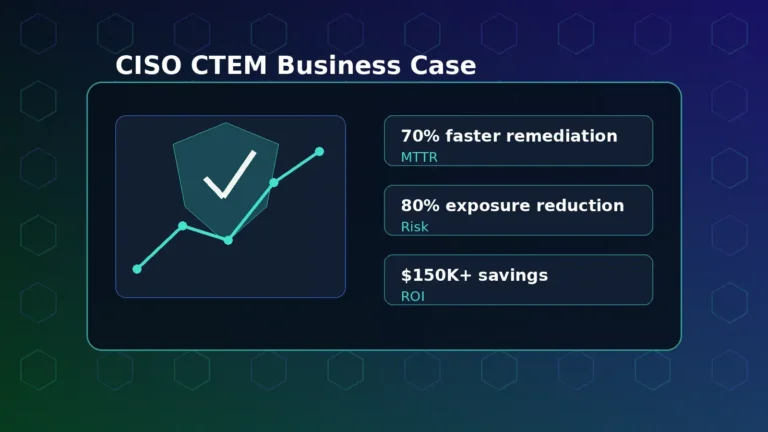
The Mobilize module in Uni5 orchestrates remediation through integration with ticketing systems, patch management platforms, and security orchestration tools. Organizations using Hive Pro report a 70% reduction in mean time to remediate, dropping from an average of three weeks to three days. For NIS2, faster remediation means less time exposed to known risks and a stronger position during compliance audits.
Uni5 provides continuous monitoring with dashboards that track exposure reduction over time. This supports NIS2’s requirement for ongoing risk assessment (not just point-in-time snapshots) and provides the board-level reporting metrics that management bodies need to fulfill their oversight obligations under Article 20.
Schedule a demo to see how Uni5 Xposure maps to your NIS2 compliance gaps.
If your organization falls under NIS2’s scope, here is a practical approach to building compliance using a CTEM-based strategy:
| Requirement | Traditional VM Approach | CTEM/Exposure Management Approach |
|---|---|---|
| Asset inventory | Periodic scans of known IP ranges | Continuous discovery across all environments including EASM |
| Risk prioritization | CVSS scores only | Threat intelligence + asset criticality + exploitability |
| Security evaluation | Scan completion reports | Breach and attack simulation with control validation |
| Remediation speed | 3+ weeks average MTTR | 3 days average MTTR with automated workflows |
| Supply chain visibility | Vendor questionnaires | External attack surface monitoring of supplier connections |
| Reporting | Quarterly PDF reports | Real-time dashboards with exposure reduction metrics |
| Compliance evidence | Manual documentation | Automated audit trails with timestamps and validation results |
NIS2 applies to medium-sized and large organizations operating in essential sectors (energy, transport, banking, health, digital infrastructure, public administration) and important sectors (postal services, waste management, food, manufacturing, digital providers, research). Any organization with 50+ employees or over 10 million euros in annual turnover operating in these sectors within the EU must comply.
Essential entities face fines of up to 10 million euros or 2% of global annual turnover, whichever is higher. Important entities face fines of up to 7 million euros or 1.4% of global annual turnover. Beyond financial penalties, management can face personal liability and temporary bans from executive roles.
Traditional vulnerability management focuses on finding and patching known vulnerabilities, typically using CVSS scores for prioritization. Exposure management takes a broader view: it maps your complete attack surface, prioritizes based on real-world threat intelligence and business context, validates whether security controls actually work, and drives remediation with automated workflows. NIS2 requires this broader, risk-based approach rather than simple scan-and-patch cycles.
EU member states had until October 17, 2024, to transpose NIS2 into national law. Organizations in covered sectors should already be working toward compliance. Enforcement timelines vary by country, but regulators are actively conducting assessments and non-compliant organizations face penalties.
CTEM reduces the likelihood of incidents by continuously finding and fixing exposures before attackers exploit them. When incidents do occur, the visibility and documentation that a CTEM program provides, including asset inventories, threat context, and remediation records, helps organizations meet NIS2’s 24-hour early warning and 72-hour notification requirements with accurate, detailed reports.
Get started with a Hive Pro demo to see how Uni5 Xposure supports your NIS2 compliance program.