 Critical Threat Research : The Iranian Cyber War Intensifies!


Comprehensive Threat Exposure Management Platform
Financial institutions are the most targeted sector for cyberattacks. With an average breach cost of $6.08 million and regulators tightening requirements under PCI-DSS 4.0 and DORA, reactive security programs leave banks exposed. Hive Pro delivers Continuous Threat Exposure Management (CTEM) built for financial services, so your team can identify, prioritize, and fix the exposures that matter before attackers find them. Hive Pro’s financial services cybersecurity solutions help banks connect CTEM priorities with measurable exposure reduction.
Banks, insurers, and investment firms manage some of the most sensitive data on the planet: customer account details, transaction records, personally identifiable information, and proprietary trading algorithms. That makes financial services a prime target.
The numbers paint a clear picture:
Traditional vulnerability management programs that rely on periodic scanning and CVSS-based prioritization cannot keep up. Financial services organizations need a continuous, threat-informed approach that accounts for real-world exploitability, regulatory context, and business impact.
Continuous Threat Exposure Management (CTEM) is a five-stage framework created by Gartner that shifts security teams from reactive patching to proactive exposure reduction. CTEM moves beyond finding vulnerabilities to validating which ones attackers can actually exploit and mobilizing the right teams to fix them.
For financial institutions, CTEM addresses three challenges that traditional vulnerability management ignores:
Book a Demo | Start a Free 30-Day Trial
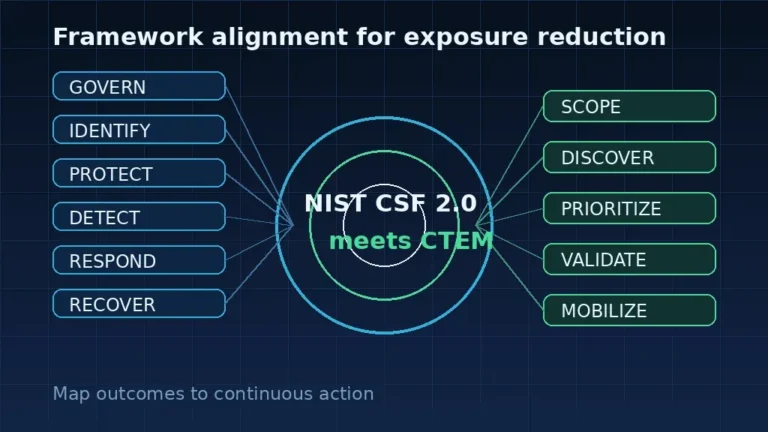
Hive Pro’s Uni5 Xposure platform is the only platform that unifies all five stages of the Gartner CTEM framework into a single product. Here is how each stage applies to banks and financial institutions:
Define what matters. Uni5 Xposure maps your financial institution’s full attack surface, including core banking systems, payment processing infrastructure, customer-facing applications, ATM networks, cloud workloads, and third-party vendor connections. You set scope based on business units, regulatory boundaries, or critical asset groups.
Find every exposure. Six native enterprise-grade scanners (code, container, cloud, web application, network, and mobile) plus External Attack Surface Management (EASM) work alongside 50+ integrations with tools like Qualys, Tenable, and Snyk. This means Uni5 Xposure fits into your existing security stack without ripping and replacing your current scanners.
Focus on what matters. The proprietary Unictor AI engine goes beyond CVSS scores. It evaluates exploit availability, active threat actor campaigns targeting financial services, dark web intelligence, asset criticality, and compensating controls already in place. The result: a focused list of exposures ranked by actual risk to your institution.
Confirm before you fix. Built-in Breach and Attack Simulation (BAS) tests whether an exposure is actually exploitable in your environment. Attack path analysis maps how vulnerabilities can be chained together to reach critical assets like payment systems or customer databases. This eliminates wasted remediation effort on vulnerabilities that compensating controls already block.
Fix and track. Automated remediation workflows generate specific fix actions, assign them to the right teams (infrastructure, application, cloud), and track progress through integration with ServiceNow, Jira, and other ITSM tools. Closed-loop verification confirms that patches are applied and exposures are resolved.
Regulators expect more than annual penetration tests and quarterly scans. PCI-DSS 4.0, SOX, GLBA, and DORA all require continuous risk assessment and evidence of ongoing remediation. Uni5 Xposure maps directly to these frameworks.
PCI-DSS 4.0 introduced targeted risk analysis requirements and continuous monitoring mandates that took effect in March 2025. Key requirements Uni5 Xposure addresses:
Section 404 of the Sarbanes-Oxley Act requires internal controls over financial reporting, including IT general controls. Uni5 Xposure provides:
The updated Safeguards Rule requires financial institutions to implement continuous monitoring of information systems. Uni5 Xposure delivers:
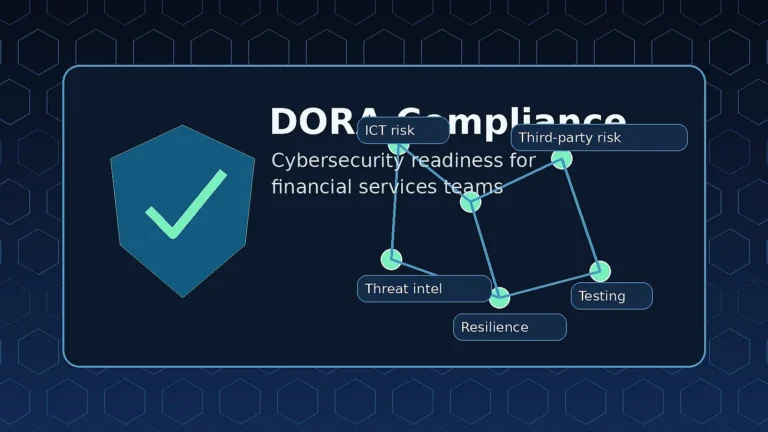
For institutions with European operations, DORA mandates ICT risk management and digital operational resilience testing. Uni5 Xposure supports:
| Capability | Legacy VM (Qualys, Tenable, Rapid7) | Hive Pro Uni5 Xposure |
|---|---|---|
| CTEM stages covered | 2-3 (Discover, Prioritize) | All 5 (Scope through Mobilize) |
| Prioritization method | CVSS/EPSS scores | Unictor AI with threat intel, exploit data, asset context |
| Breach simulation | Separate tool purchase | Built-in BAS and attack path analysis |
| Native scanners | 1-2 scanner types | 6 scanners + EASM |
| Threat intelligence | Generic feeds | In-house HiveForce Labs (230,000+ CVEs, 270+ threat actors) |
| Regulatory mapping | Manual or limited | Direct PCI-DSS, SOX, GLBA, DORA alignment |
| Time to remediate | 3+ weeks average | 70% reduction (from weeks to days) |
Financial institutions that switch from legacy vulnerability management to Hive Pro’s CTEM platform report measurable outcomes:
Core banking platforms process millions of transactions daily. A single exploited vulnerability can disrupt operations, compromise customer funds, and trigger regulatory action. Uni5 Xposure provides continuous visibility into exposures across your core banking infrastructure, prioritizes them by business impact, and validates whether attackers can actually reach those systems through your network.
Payment card environments face specific PCI-DSS requirements and targeted attacks from financially motivated threat actors. Uni5 Xposure’s code-to-cloud scanning covers the full payment processing stack, from application code to network infrastructure, while the Unictor engine prioritizes exposures based on active campaigns targeting payment systems.
Financial institutions rely on hundreds of vendors and third-party service providers. Each one introduces risk that traditional perimeter defenses cannot address. Uni5 Xposure’s External Attack Surface Management identifies exposures in your external-facing vendor connections, while attack path analysis shows how a compromised vendor integration could lead to critical system access.
When banks acquire new companies or launch digital products, the attack surface expands rapidly. Uni5 Xposure’s total attack surface management provides immediate visibility into newly inherited assets, identifies exposures from day one, and helps security teams prioritize remediation before integration is complete.
Hive Pro’s in-house research division, HiveForce Labs, tracks threats specifically relevant to financial institutions. Four dedicated research teams monitor:
This intelligence feeds directly into the Unictor prioritization engine, ensuring your team sees threats through the lens of what is targeting financial services right now, not just what has a high CVSS score.
Implementing a CTEM program does not require replacing your existing security tools. Uni5 Xposure integrates with your current scanners, SIEM, SOAR, and ITSM systems through 50+ out-of-the-box connectors.
Three ways to start:
Continuous Threat Exposure Management (CTEM) is a five-stage security framework defined by Gartner that shifts organizations from reactive vulnerability patching to proactive exposure reduction. Financial institutions need CTEM because they face a high volume of targeted attacks, strict regulatory mandates (PCI-DSS 4.0, SOX, GLBA, DORA), and complex IT environments that span core banking, payment systems, cloud workloads, and third-party integrations. CTEM provides continuous visibility and validated prioritization across all of these surfaces.
Traditional vulnerability management focuses on discovering and patching known vulnerabilities, typically using CVSS scores for prioritization. CTEM goes further by adding validation (confirming an exposure is actually exploitable in your specific environment) and mobilization (automated workflows to assign and track remediation). CTEM also incorporates threat intelligence and business context into prioritization, so your team fixes what matters most instead of chasing the highest CVSS number.
No. Uni5 Xposure integrates with 50+ security tools, including Qualys, Tenable, Snyk, CrowdStrike, and SentinelOne. It aggregates and normalizes data from your existing scanners, then enriches it with threat intelligence and validated prioritization. You can also use Hive Pro’s six native scanners to fill coverage gaps without adding separate tools.
Uni5 Xposure maps directly to PCI-DSS 4.0 requirements for continuous vulnerability identification (Req 6.3), internal and external scanning (Req 11.3), and targeted risk analysis (Req 12.3.1). The platform provides audit-ready reports that show how exposures were discovered, why they were prioritized, and when they were remediated, giving your QSA the evidence they need.
Organizations using Hive Pro report an 80% reduction in threat exposure, 70% faster mean time to remediate, $150,000+ annual savings from tool consolidation, and a 5X improvement in security team productivity. Results vary based on environment complexity and current security maturity, but most teams see measurable improvement within the first 90 days.
Yes. Uni5 Xposure supports organizations from 500 employees up to global enterprises with 10,000+ staff. Flexible deployment options (on-premises, cloud, or hybrid) and a 30-day free trial make it accessible for mid-size institutions that need enterprise-grade exposure management without the complexity of managing multiple point solutions.