Comprehensive Threat Exposure Management Platform
Hive Pro recognized in Gartner® Magic Quadrant™ for Exposure Assessment Platform, 2025 Watch platform in action
Let’s cut right to it. Your vulnerability management team has a list of vulnerabilities longer than your arm, and every single one seems to be a top priority. But you don’t have the time or resources to fix everything at once. You need a way to focus on what truly matters right now. This is the exact problem the Exploit Prediction Scoring System was designed to solve. If you’re asking what is EPSS, think of it as a threat forecast for your vulnerabilities. It provides a simple probability score, telling you how likely a specific CVE is to be exploited by attackers in the near future.
Let’s cut to the chase: what exactly is the Exploit Prediction Scoring System (EPSS)? Think of it as a weather forecast for vulnerabilities. It’s a data-driven framework designed to estimate the probability that a specific Common Vulnerability and Exposure (CVE) will be exploited in the wild. Instead of just telling you how severe a vulnerability could be if exploited, EPSS tells you how likely it is to actually be used against you in the near future. This is a huge step forward from older, more static scoring systems that often leave security teams drowning in a sea of ‘critical’ alerts without any context on what to fix first.
EPSS uses machine learning models that are constantly fed with large datasets, including real-world exploitation events and threat intelligence from sources across the web. This means its predictions aren’t based on a one-time assessment; they’re dynamic and continuously updated as the threat landscape changes. By assigning a probability score to each vulnerability, EPSS gives your team a clear, actionable metric to guide your vulnerability and threat prioritization efforts. It helps you answer the most critical question: “Of the thousands of vulnerabilities we have, which ones pose an immediate threat and demand our attention right now?” This predictive power is what separates modern exposure management from legacy vulnerability scanning.
So, why should this matter to your security team? Because it helps you work smarter, not harder. Security teams are constantly overwhelmed with a long list of vulnerabilities to patch. EPSS helps you decide which ones to fix first by focusing on the vulnerabilities most likely to be attacked. Instead of chasing every high-severity vulnerability, you can concentrate your resources on the ones that pose a genuine, immediate risk. This shifts your team’s focus from theoretical severity to real-world exploitability, ensuring you’re addressing what attackers are actually targeting. It’s about cutting through the noise to reduce your true exposure.
EPSS wasn’t created in a vacuum. It was developed through a collaboration between the Forum of Incident Response and Security Teams (FIRST) and leading security researchers. They saw a major gap in how the industry was handling vulnerability management. Teams were struggling with static, severity-based assessments that didn’t account for the likelihood of an attack. The goal was to build a predictive, data-driven system that uses machine learning to estimate the probability of exploitation. EPSS was born from the need to provide a more accurate, forward-looking approach to help teams prioritize effectively and stay ahead of active threats.
The Exploit Prediction Scoring System isn’t just guessing which vulnerabilities will cause trouble. It’s a data-driven model that uses a sophisticated process to calculate the probability of exploitation. By understanding how EPSS generates its scores, you can better trust and integrate its predictions into your vulnerability management workflow. It all comes down to three key components: the data it analyzes, the machine learning model that finds patterns, and the specific timeframe it predicts for.
EPSS builds its predictions on a foundation of real-world data. The model pulls from a massive and diverse set of inputs to get a complete picture of a vulnerability’s context. This includes details about the software vendor, the age of the vulnerability, its assigned Common Weakness Enumeration (CWE), and its CVSS score. Crucially, it also scours threat intelligence feeds and security sources to see if any public proof-of-concept code or exploit tools already exist. By combining these different data points, the system learns what characteristics are commonly associated with vulnerabilities that get exploited in the wild. This intelligence-driven approach is what gives the score its predictive power.
At its core, EPSS uses a machine learning model to connect the dots between vulnerability data and actual exploitation events. The model is trained on vast amounts of historical data, allowing it to identify subtle patterns and relationships that a human analyst might miss. Think of it as an expert system that has studied countless past vulnerabilities to learn what makes one a target for attackers. To ensure its predictions are reliable, the model is continuously tested. It’s trained on one set of past data and then evaluated on how well it predicts exploitation in a more recent period it hasn’t seen before, refining its accuracy over time.
An EPSS score gives you a very specific piece of information: the estimated probability that a vulnerability will be exploited within the next 30 days. This is a critical distinction. The score, which ranges from 0 to 1 (or 0% to 100%), is a forward-looking forecast, not a static measure of severity. A high score means there’s a strong signal that attackers are likely to leverage that specific CVE in the near future. This 30-day window provides a clear and actionable timeframe, helping your team focus its vulnerability and threat prioritization efforts on the threats that pose the most immediate risk to your organization.
An EPSS score gives you a straightforward, data-driven answer to the question, “What are the chances this vulnerability will actually be exploited?” Instead of just telling you how severe a vulnerability could be, EPSS predicts the probability that attackers will try to exploit it in the wild within the next 30 days. Think of it as a threat forecast for your vulnerabilities. This predictive insight is a game-changer for vulnerability management because it helps you focus your limited time and resources on the threats that are most likely to materialize, rather than chasing down every single high-severity vulnerability.
By adding this layer of probability, you can move from a purely reactive stance to a more proactive one. It allows your team to prioritize remediation efforts based on real-world likelihood, ensuring you’re fixing the issues that pose the most immediate danger to your organization. This shift helps you work smarter, not just harder, by concentrating on the vulnerabilities that attackers are actively targeting.
The EPSS score is presented as a simple probability value ranging from 0 to 1, which you can also think of as 0% to 100%. The higher the score, the greater the likelihood of exploitation. For example, a vulnerability with an EPSS score of 0.90 has a 90% chance of being exploited by attackers within the next 30 days. A score of 0.05, on the other hand, means there’s only a 5% chance. This simple scale makes it incredibly easy to understand the immediate risk associated with a specific CVE at a glance. It cuts through the complexity and gives your team a clear, quantifiable metric to work with when deciding what to patch first.
The EPSS score isn’t just a guess; it’s calculated by a sophisticated machine learning model that analyzes a massive amount of data. This model considers a wide range of factors to determine the probability of exploitation. Key inputs include whether public exploit code is available, information from security vendors, and, most importantly, real-world exploit activity observed in the wild from sources like honeypots and security sensors. The EPSS model continuously gathers and processes this data to find patterns that correlate with exploitation attempts. This dynamic approach ensures the score reflects the current threat landscape, not just the theoretical severity of a vulnerability.
There is no universal “bad” EPSS score. The right threshold for your organization depends entirely on your risk appetite and available resources. A good starting point is to establish clear internal policies. For instance, your team might decide to immediately remediate any vulnerability on a critical asset that has an EPSS score above 0.75 (75%). For less critical systems, you might set the threshold at 0.90. By setting these actionable thresholds, you create a consistent, data-driven process for your team. This removes the guesswork from prioritization, reduces alert fatigue, and empowers your security professionals to focus their efforts on the vulnerabilities that truly matter right now.
When you’re staring at a long list of vulnerabilities, knowing which one to tackle first is everything. For years, the Common Vulnerability Scoring System (CVSS) has been the go-to standard. But now, the Exploit Prediction Scoring System (EPSS) offers a new, complementary perspective. While both systems assign a score to a vulnerability, they measure completely different things. Understanding the distinction is key to building a more effective and efficient vulnerability management program. Let’s break down how they differ and why you really need both.
The core difference between CVSS and EPSS comes down to what they measure: severity versus likelihood. CVSS looks at a vulnerability in isolation and rates its potential severity. It answers the question: If a threat actor exploited this, how much damage could they do? It considers factors like attack complexity and the impact on confidentiality, integrity, and availability. Think of it as the theoretical maximum impact. EPSS, on the other hand, focuses on the probability of exploitation. It answers a more urgent question: How likely is it that someone will actually exploit this in the next 30 days? It uses real-world threat data to predict what attackers are actively targeting, giving you a practical, risk-based view for vulnerability and threat prioritization.
EPSS doesn’t replace CVSS; it enhances it. Using them together provides a much richer context for decision-making. A vulnerability might have a critical CVSS score of 9.8, causing alarm bells to ring. But if its EPSS score is low, it means that despite its potential severity, no one is actively exploiting it yet. You can likely deprioritize it in favor of a vulnerability with a moderate CVSS score but a high EPSS score, which indicates an active and present danger. This two-pronged approach helps your team focus its limited time and resources on the threats that pose an immediate risk, moving beyond a purely theoretical assessment of severity.
One of the most significant differences is how the scores change over time. A CVSS score is largely static. Once it’s assigned, it rarely changes unless a fundamental aspect of the vulnerability is re-evaluated. It’s a fixed snapshot of the vulnerability’s inherent qualities. EPSS is the opposite; it’s highly dynamic. Because the likelihood of exploitation can shift rapidly, EPSS scores are updated daily based on the latest threat intelligence. A vulnerability that wasn’t a major threat yesterday could become one today if new exploit code is published. This dynamic nature allows you to adapt to the evolving threat landscape and focus on what’s most likely to be exploited right now, as highlighted in real-time threat advisories.
If your team feels like they’re constantly playing catch-up, you’re not alone. Traditional vulnerability management often involves staring at a massive list of vulnerabilities, with CVSS scores screaming that everything is a top priority. It’s an overwhelming and inefficient way to work. This is where EPSS changes the game. By adding the crucial context of likelihood, EPSS helps you see which threats are just theoretical and which ones are actually knocking at your door.
Integrating EPSS into your workflow allows your team to make smarter, data-driven decisions. Instead of patching based on severity alone, you can focus on the vulnerabilities that pose a clear and present danger. This shift doesn’t just make your remediation efforts more effective; it transforms your entire security posture. You move from a reactive state of constantly fighting fires to a proactive one where you can anticipate and neutralize threats before they’re exploited. It’s a fundamental part of a modern vulnerability and threat prioritization strategy that respects your team’s time and resources.
A reactive security strategy means you’re always one step behind the attackers. You wait for a vulnerability to be flagged as critical, then scramble to patch it. EPSS flips this script. It “helps organizations decide which vulnerabilities to fix first by predicting which ones are most likely to be exploited.” This predictive power is what enables a truly proactive defense. Instead of just reacting to a high CVSS score, you can anticipate an attacker’s next move. This allows you to allocate resources to fix the holes that are most likely to be targeted, effectively strengthening your defenses before an attack even begins.
Let’s be honest: your team doesn’t have the time or budget to fix every single vulnerability. Prioritization is key, but it has to be the right prioritization. Combining CVSS and EPSS gives you a powerful matrix for decision-making. As experts at NetRise point out, “By prioritizing the vulnerabilities that have a high CVSS score (impact) and high EPSS score (likelihood of exploitability), organizations can go from a list of hundreds or thousands of vulnerabilities down to just a handful to focus on.” This laser focus means your team’s valuable time is spent on what matters most, maximizing your security ROI and preventing burnout. A unified platform like Uni5 Xposure can help visualize this data, making it even easier to act.
Security teams are drowning in alerts. When every vulnerability is labeled “critical,” it becomes impossible to know where to start, leading to serious alert fatigue. Many of these alerts are for vulnerabilities that have a high severity score but a very low chance of ever being exploited in the wild. EPSS acts as a powerful filter, cutting through this noise. It “shifts attention to real-world exploitability, helping teams fix what attackers are actually targeting instead of wasting time on theoretical risks.” This allows your team to confidently ignore low-probability threats and concentrate on the ones that pose a genuine, immediate risk to your organization.
Knowing what EPSS is and how it works is one thing; integrating it into your daily operations is another. The real value comes when EPSS scores become a seamless part of your vulnerability management lifecycle, helping you make faster, smarter decisions. It’s not about adding another number to your dashboard but about fundamentally changing how you approach prioritization. By combining EPSS with other security tools and processes, you can transform it from a predictive metric into a powerful engine for proactive defense.
The goal is to create a workflow where EPSS data automatically informs your triage, validation, and remediation efforts. This means you’re not just reacting to the latest high-severity vulnerability but are strategically addressing the threats most likely to impact your organization. Let’s walk through three practical steps to make EPSS an active component of your security strategy, helping your team work more efficiently and effectively.
An EPSS score tells you the general probability of exploitation, but it doesn’t tell you if a threat actor is actively targeting that vulnerability right now. That’s where threat intelligence comes in. By layering EPSS data with real-time intelligence feeds, you gain crucial context. This combination allows you to see which vulnerabilities are not only likely to be exploited but are also appearing in active campaigns or being discussed on dark web forums.
This approach helps you connect the dots between a theoretical probability and an immediate threat. For instance, a vulnerability with a moderate EPSS score might jump to the top of your list if your threat intelligence platform shows it’s being used by an APT group targeting your industry. This fusion of data ensures your team focuses its limited resources on the vulnerabilities that pose a clear and present danger to your specific environment.
An EPSS score predicts the likelihood of an exploit, but a Breach and Attack Simulation (BAS) platform can confirm if that exploit would actually work in your environment. Think of it as the ultimate reality check. Your security controls—firewalls, EDR, and other defenses—might successfully block an attack path, making a high-EPSS vulnerability a lower priority for you. BAS tools let you safely test these attack scenarios.
By running simulations based on high-EPSS vulnerabilities, you can validate your defensive posture and see where your controls hold up and where they fail. This process of adversarial exposure validation provides concrete evidence to either confirm or de-prioritize a vulnerability based on its actual impact on your systems. It moves you from relying solely on a probability score to making decisions based on empirical results from your own security infrastructure.
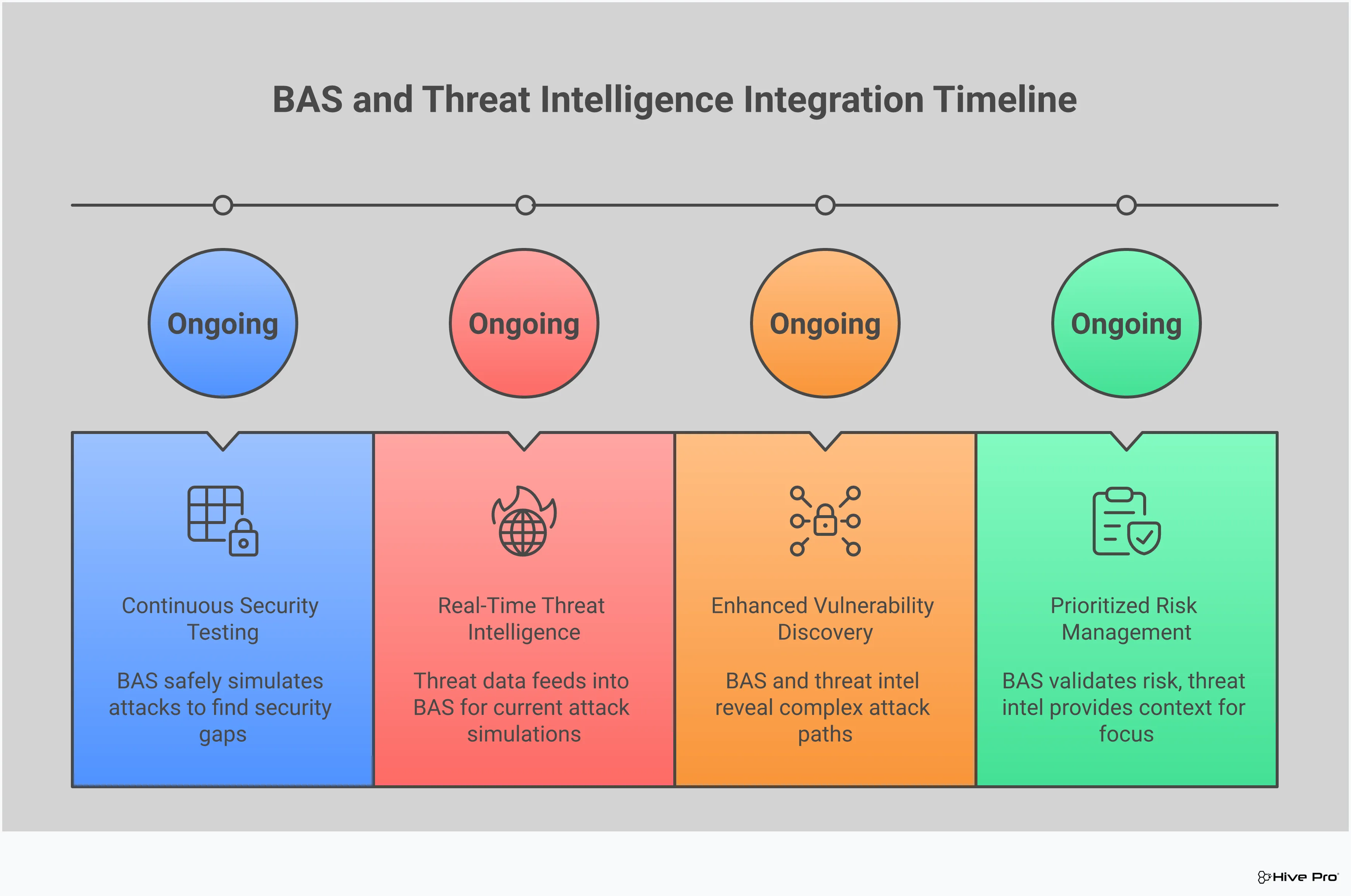
Manually cross-referencing EPSS scores, CVSS data, asset criticality, and threat intelligence for thousands of vulnerabilities is simply not sustainable. To truly operationalize EPSS, you need to automate the triage and prioritization process. An effective threat exposure management platform can ingest all these data points and apply your organization’s risk appetite to the process automatically.
Automation transforms raw vulnerability data into a prioritized, actionable list. You can set rules to automatically create remediation tickets for vulnerabilities that exceed a certain EPSS threshold and affect critical assets. This frees your security team from the tedious work of manual analysis, reducing alert fatigue and minimizing the risk of human error. Instead of spending their days sifting through data, your team can focus on what they do best: fixing the problems that matter most.
As much as EPSS transforms how we approach vulnerability management, it’s not a crystal ball. To use it effectively, you have to understand what it’s telling you—and what it isn’t. Thinking of it as a single source of truth is a common pitfall. Instead, view it as a powerful, specialized data point that adds crucial context to your existing security information. A mature security program never relies on just one metric, and incorporating EPSS is no different. It’s about adding a layer of predictive intelligence, not replacing the critical thinking and contextual awareness your team already brings to the table.
The key is to be an informed user of the data. This means recognizing that EPSS is based on probability, its accuracy is tied to the quality of its input data, and it intentionally leaves business impact out of the equation. When you understand these limitations, you can avoid common misinterpretations and integrate EPSS scores into your workflow in a way that genuinely strengthens your security posture. By pairing its predictive power with asset criticality and comprehensive threat intelligence, you can build a much more resilient and proactive defense.
First and foremost, it’s important to remember that EPSS provides a probability, not a certainty. An EPSS score of 90% doesn’t guarantee an exploit will happen; it means that, based on historical data and current threat activity, there’s a 9 in 10 chance of exploitation within the next 30 days. Think of it like a weather forecast. A 90% chance of rain makes it a very good idea to bring an umbrella, but it doesn’t mean you’re guaranteed to get wet. The EPSS model is designed to help you make smarter, data-driven bets on where to focus your team’s limited time and resources. It helps you prioritize with confidence, but it doesn’t eliminate the element of chance.
Because EPSS is built on a machine learning model, its predictions are only as good as the data it learns from. The model is trained on a massive dataset of CVE information and real-world exploitation evidence. However, the threat landscape is constantly shifting. New attack techniques emerge, and threat actors change their targets and tactics. This means the model’s performance can change over time, and it requires regular updates to maintain its accuracy. This is why relying solely on a static EPSS score isn’t enough. You need a continuous feedback loop that enriches this data with up-to-the-minute threat advisories and intelligence about active campaigns in the wild.
An EPSS score answers one question brilliantly: “How likely is this vulnerability to be exploited?” But it deliberately avoids another critical question: “So what if it is?” The score doesn’t consider the potential impact of an exploit. A vulnerability with a 95% EPSS score on a developer’s laptop is a different level of crisis than one with a 70% score on your primary database server. This is why you can’t abandon CVSS or asset criticality. Your team must combine these data points to get a complete picture of risk. A true vulnerability and threat prioritization strategy uses EPSS to filter for likelihood, then layers on business context to determine the ultimate priority.
Adopting EPSS is a fantastic step, but it’s not a magic wand. To truly transform your vulnerability management program, you need a strategy for how you’ll use these scores. It’s about integrating this new data stream into your existing workflows in a way that makes sense for your team and your organization’s specific risk profile. Think of it as moving from simply having the data to making it work for you.
Getting the most out of EPSS means setting clear rules, training your team to understand the context behind the numbers, and creating a feedback loop to continuously refine your approach. By operationalizing EPSS, you can turn its predictive power into a consistent, measurable, and proactive defense strategy. This is how you move beyond just patching vulnerabilities and start actively reducing your threat exposure based on real-world likelihood.
The first step is deciding what an EPSS score means to you. There’s no universal “high score” that fits every organization. Your team needs to establish internal thresholds based on your specific risk appetite and available resources. For some, any vulnerability with an EPSS score over 0.5 might trigger an immediate response, while others with more limited patching capacity might set the bar at 0.75.
Start by analyzing your current vulnerability landscape and remediation capabilities. What can your team realistically handle? Set a baseline threshold and monitor the results. You can always adjust these numbers as you get more comfortable with the data and see how it impacts your workflow. The goal is to create a clear, actionable line in the sand that tells your team, “When a score is this high, we act.”
An EPSS score is just a number until your team knows how to interpret it and what to do next. Training is essential for turning this data into decisive action. Your security and IT teams need to understand that EPSS provides the likelihood of exploitation, which adds critical context to the severity described by a CVSS score. By using EPSS, your team can gain valuable insight and make informed decisions about where to focus their efforts.
Develop simple playbooks for different EPSS score ranges. For example, a score above your established threshold might automatically generate a high-priority ticket for the remediation team, while a lower score might be flagged for review during the next patching cycle. This ensures everyone is on the same page and can act quickly and consistently, reducing confusion and response times.
To prove the value of EPSS and refine your strategy, you need to track your progress. Start by measuring key metrics like the mean time to remediate (MTTR) for vulnerabilities with high EPSS scores. Are you patching the most likely-to-be-exploited threats faster than before? Also, track the number of exploited vulnerabilities in your environment over time—ideally, this number should decrease as your prioritization becomes more accurate.
Incorporating business data and context from your threat exposure management platform transforms raw EPSS scores into actionable insights that guide your strategy. With these improvements, EPSS scoring gives clearer insights into exploitability, helping your teams focus on real threats. Regularly review your metrics and thresholds to ensure your program remains effective and aligned with the evolving threat landscape.
Adopting EPSS is about more than just adding another number to your spreadsheet. It represents a fundamental shift in how you approach exposure management. Instead of just reacting to an endless list of vulnerabilities, you can start making strategic, proactive decisions based on what attackers are actually doing in the wild. This moves your team away from a compliance-driven, check-the-box exercise and toward a truly threat-informed defense that reduces real-world risk.
For years, vulnerability management has been dominated by theoretical risk. We’d look at a high CVSS score and assume the worst, even if there was no evidence of attackers ever exploiting it. EPSS flips the script by focusing on the probability of exploitation. It answers the question, “Is anyone actually using this vulnerability to attack systems right now?” This allows your team to prioritize vulnerabilities that pose a clear and present danger. You can finally stop wasting cycles on patching vulnerabilities that are technically severe but practically irrelevant and concentrate your efforts where they’ll have the greatest impact.
When you combine EPSS (likelihood) with CVSS (impact), you get a powerful, data-driven framework for decision-making. This combination helps you pinpoint the vulnerabilities that are both severe and actively exploited—the ones that should be at the very top of your remediation list. Instead of facing a sea of thousands of “critical” alerts, you can narrow your focus to a manageable handful. This approach provides a unified view of cyber risks, making it easier to justify your priorities to leadership and demonstrate measurable improvements in your security posture. You’re no longer guessing; you’re making confident choices backed by solid data.
EPSS isn’t a one-off solution; it’s a vital data stream that fuels a modern Continuous Threat Exposure Management (CTEM) program. In a CTEM framework, you’re constantly assessing your attack surface and adapting to the evolving threat landscape. EPSS provides the real-time, predictive intelligence needed to make this continuous loop effective. By integrating EPSS scores with your own asset inventory, business context, and other threat intelligence feeds, you can transform raw data into actionable insights. This is how you move from being reactive to truly proactive, continuously reducing your exposure before attackers can find a foothold.
So, what’s considered a ‘bad’ EPSS score that I should act on? There isn’t a universal magic number, as the right threshold really depends on your organization’s risk tolerance and your team’s capacity. A good starting point is to tie the score to asset criticality. For your most critical systems, you might decide to act on anything with a score above 70% (0.70). For less sensitive assets, perhaps the line is 90% (0.90). The key is to establish clear, internal rules that turn the score into a straightforward trigger for action, removing the guesswork for your team.
What should I do if a vulnerability has a high EPSS score but a low CVSS score? This is a great question because it gets to the heart of smart prioritization. This scenario points to a vulnerability that attackers are actively trying to exploit, even if the direct impact seems minor. You should still investigate it. Low-impact vulnerabilities can often be the first step in a longer attack chain. This is where context matters more than a single score. Consider the asset it’s on and whether it could give an attacker a foothold to move laterally across your network.
How does EPSS help me get more value from my Breach and Attack Simulation (BAS) tools? Think of EPSS as the targeting system for your BAS platform. Instead of running simulations for every theoretical threat, you can use high EPSS scores to prioritize which attack paths to test first. If a vulnerability has a high probability of being exploited in the wild, you can use your BAS tool to immediately validate whether that exploit would succeed against your specific security controls. This helps you confirm if a likely threat is a real danger to you.
If EPSS scores are updated daily, how do I keep up without getting overwhelmed? You’re right, trying to track these changes manually would be impossible. This is precisely where automation becomes your best friend. An integrated threat exposure management platform should handle this for you. It can ingest the daily EPSS updates and automatically cross-reference them with your asset inventory and CVSS data. The system should only alert you when a vulnerability crosses a risk threshold you’ve already defined, ensuring you only focus on what’s become a priority.
Is EPSS only useful for large, mature security teams? Not at all. In fact, it can be even more valuable for smaller teams with limited resources. When you can’t fix everything, you absolutely must fix the right things. EPSS provides the data to make those tough prioritization calls with confidence. It helps smaller teams focus their efforts on the handful of vulnerabilities that pose a genuine, immediate threat, allowing them to be incredibly efficient and effective with the time they have.