Threat and Vulnerability Management: Building a Unified Program

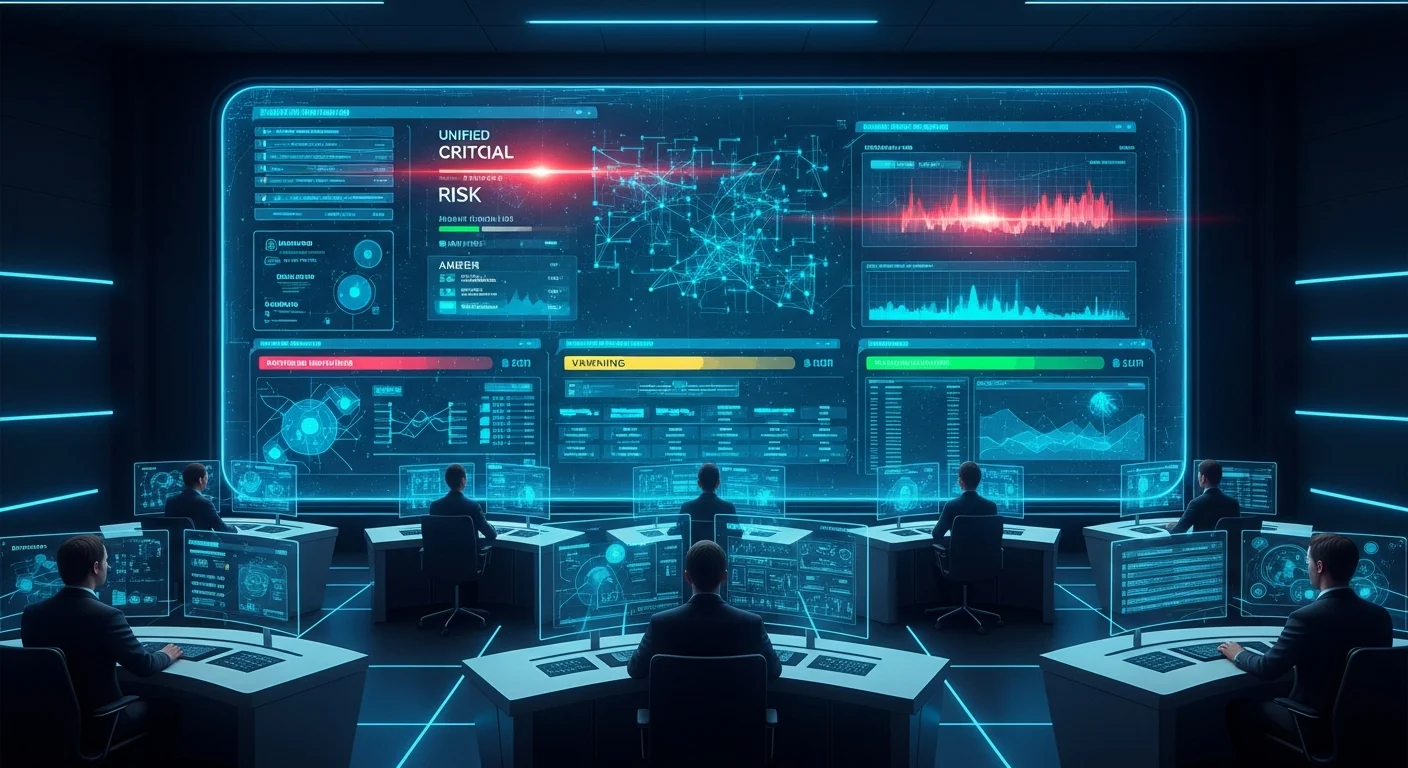
Most security teams run threat intelligence and vulnerability management as separate operations. Threat analysts track adversary campaigns and emerging exploits. Vulnerability teams run scans, generate reports, and chase patches. The two groups rarely share a workflow, a priority list, or even a common view of risk.
That disconnect is expensive. When threat intelligence and vulnerability management operate in silos, organizations waste remediation cycles on low-risk CVEs while actively exploited vulnerabilities sit unpatched. Research shows that 61% of vulnerabilities exploited in 2025 were weaponized within 48 hours of disclosure, yet most vulnerability management programs still operate on weekly or monthly scan cycles.
Threat and vulnerability management (TVM) closes that gap. It is a unified approach that combines real-time threat intelligence with vulnerability data to prioritize remediation based on actual exploit activity, asset criticality, and business impact, not just severity scores.
This guide explains how TVM works, why it outperforms siloed approaches, and how to build a program that delivers measurable risk reduction.
See how Uni5 Xposure unifies threat intelligence with vulnerability management. Book a demo.
What Is Threat and Vulnerability Management?
Threat and vulnerability management is an integrated cybersecurity discipline that merges two traditionally separate functions into a single, continuous program:
- Vulnerability management identifies, classifies, and remediates weaknesses across IT assets, including software flaws, misconfigurations, and identity risks.
- Threat intelligence provides context on which vulnerabilities are being actively exploited, which threat actors are targeting your industry, and which attack techniques are trending.
When combined, TVM enables security teams to answer a question that neither function can answer alone: Which vulnerabilities in our environment are most likely to be exploited by real adversaries right now?
Instead of treating every critical-severity CVE as equally urgent, a threat and vulnerability management program filters thousands of findings down to the exposures that actually matter. This is the difference between patching 10,000 vulnerabilities and focusing remediation on the 200 that represent genuine, imminent risk.
TVM vs. Traditional Vulnerability Management
Traditional vulnerability management relies heavily on CVSS scores to rank remediation priorities. A CVSS 9.8 vulnerability on an air-gapped test server gets the same urgency as a CVSS 7.2 on an internet-facing admin panel being probed by a known threat actor. That misalignment wastes time and leaves real attack paths open.
A threat and vulnerability management program adds three layers of context that CVSS alone cannot provide:
- Exploit intelligence: Is a working exploit available in the wild? Is it being sold on dark web forums?
- Threat actor mapping: Are adversaries targeting your industry or region with campaigns that leverage this vulnerability?
- Asset criticality: Does this vulnerability exist on a system that, if compromised, would disrupt critical business operations?
By layering these signals over vulnerability scan data, TVM transforms an unmanageable backlog into a prioritized, actionable remediation queue.
Why Siloed Programs Fail
Organizations that run threat intelligence and vulnerability management separately face three systemic problems.
Volume Overwhelm Without Context
Over 40,000 CVEs were published in 2024 alone. No security team can remediate all of them. Without threat intelligence to filter the noise, vulnerability teams default to severity-based triage, which research consistently shows is an unreliable proxy for actual risk. Studies indicate that 75% of discovered exposures are dead ends that do not lead to critical assets, and 63% of vulnerabilities initially flagged as critical were found to be non-exploitable after validation testing.
Slow Remediation Cycles
When threat intelligence is not integrated into the vulnerability management process, remediation decisions depend on periodic scan results and manual analysis. The average enterprise still runs on weekly or monthly scan cycles. Meanwhile, attackers weaponize vulnerabilities within days. This timing mismatch is a root cause of preventable breaches.
Misaligned Priorities
Threat intelligence teams may identify an active campaign targeting your industry, but if that intelligence is not mapped to your specific vulnerability inventory, the insight never reaches the team responsible for patching. Conversely, vulnerability teams may escalate a technically severe finding that no threat actor has any interest in exploiting. Both scenarios waste resources and increase exposure.
The Five Components of an Effective TVM Program
Building a unified threat and vulnerability management program requires five interconnected capabilities.
1. Continuous Asset Discovery
You cannot protect what you cannot see. A cyber security vulnerability management program must maintain a real-time, comprehensive inventory of all assets, including endpoints, cloud workloads, containers, APIs, identities, and third-party integrations. Shadow IT, orphaned cloud instances, and unmanaged devices are common blind spots that attackers exploit.
Continuous discovery goes beyond a static asset list. It maps relationships between assets, identifies which systems can reach critical data stores, and flags changes as infrastructure scales.
2. Threat Intelligence Integration
Raw vulnerability scan data tells you what is broken. Threat intelligence tells you what matters. Effective TVM programs ingest intelligence from multiple sources:
- Commercial threat feeds that track exploit availability and dark web activity
- Open-source intelligence (OSINT) covering published proof-of-concept exploits
- Industry-specific intelligence identifying campaigns targeting your sector (financial services, healthcare, government, etc.)
- In-house research labs that deliver curated, contextual analysis tailored to your technology stack
The goal is to enrich every vulnerability finding with exploit status, threat actor activity, and campaign relevance so that prioritization reflects real-world risk, not theoretical severity.
3. Context-Aware Prioritization
This is where threat and vulnerability management delivers its highest value. Context-aware prioritization combines vulnerability data, threat intelligence, and business context into a single risk score that accounts for:
- Exploitability: Does a working exploit exist? Is it being used in active campaigns?
- Asset criticality: How important is the affected system to business operations?
- Attack path analysis: Can an attacker chain this vulnerability with others to reach crown-jewel assets?
- Compensating controls: Are there existing security controls (firewalls, segmentation, endpoint detection) that mitigate the risk?
This approach consistently reduces the actionable remediation queue by 95% or more. Instead of chasing thousands of findings, security teams focus on the top 3% of risks that represent genuine exposure.
4. Validation and Testing
Prioritization based on intelligence is powerful, but validation confirms it. Breach and attack simulation (BAS), automated penetration testing, and red team exercises test whether prioritized vulnerabilities are actually exploitable in your specific environment.
Validation serves two purposes:
- Eliminates false urgency: It confirms which theoretical risks are real, preventing teams from wasting cycles on vulnerabilities that compensating controls already mitigate.
- Proves remediation effectiveness: After patching or applying a workaround, validation confirms the fix works, closing the loop on the vulnerability management process.
Research shows that validation testing can reduce false urgency by up to 84%, allowing teams to focus on exposures that genuinely threaten business continuity.
5. Automated Remediation Orchestration
The final component is mobilization. Identifying and prioritizing vulnerabilities is only valuable if remediation actually happens. Effective TVM programs automate the handoff from security to IT operations by:
- Generating pre-built remediation tickets in tools like Jira or ServiceNow with step-by-step fix instructions
- Assigning tickets to the correct team based on asset ownership
- Tracking mean time to remediate (MTTR) against defined SLAs
- Escalating overdue items automatically
Automation transforms remediation from a manual, ad-hoc process into a measured, accountable workflow.
How to Build a Threat and Vulnerability Management Program
If your organization is ready to move from siloed operations to a unified TVM approach, here is a practical framework.
Step 1: Conduct a Threat Vulnerability Assessment
Start with a baseline. A threat vulnerability assessment maps your current vulnerability inventory against active threat intelligence to identify the gaps between what you are scanning for and what attackers are actually exploiting. This assessment reveals:
- Vulnerabilities in your environment that are tied to active exploit campaigns
- Assets with known exposures that lack compensating controls
- Threat actors and techniques most relevant to your industry
This baseline becomes the foundation for your TVM program's prioritization logic.
Step 2: Unify Your Data Sources
Most organizations already collect vulnerability data from multiple scanners (network, application, cloud, container). The problem is that this data lives in separate tools with different formats and scoring systems. Unify these inputs into a single platform that normalizes, deduplicates, and correlates findings across your entire attack surface.
Then layer in threat intelligence feeds. The platform should automatically enrich each vulnerability with exploit availability, threat actor associations, and campaign relevance.
Step 3: Define Risk Tiers and SLAs
Not every vulnerability needs the same response time. Establish clear risk tiers based on your combined threat and vulnerability data:
Risk TierCriteriaRemediation SLACriticalActive exploit + critical asset + no compensating control24 hoursHighKnown exploit + important asset OR attack path to crown jewel72 hoursMediumTheoretical risk + moderate asset criticality7 daysLowNo known exploit + low-value asset + compensating controls30 days
Step 4: Implement Continuous Validation
Deploy breach and attack simulation alongside your vulnerability management tools. Run validation cycles weekly against your highest-risk tiers to confirm exploitability and verify that completed remediations hold.
Step 5: Measure and Iterate
Track these KPIs to measure program effectiveness:
- MTTR by risk tier: Is remediation getting faster for critical items?
- Exposure reduction rate: What percentage of validated risks have been remediated?
- Coverage: Are all assets under continuous scanning and intelligence enrichment?
- False positive rate: How often does validation disprove a prioritized finding?
Use these metrics to refine your prioritization logic, adjust SLAs, and justify continued investment to executive stakeholders.
The Role of CTEM in Modern TVM
Threat and vulnerability management aligns closely with the Continuous Threat Exposure Management (CTEM) framework introduced by Gartner. CTEM's five-stage cycle, scoping, discovery, prioritization, validation, and mobilization, provides the operational structure that makes TVM programs repeatable and scalable.
Gartner predicted that organizations prioritizing security investments through a CTEM program would be three times less likely to suffer a breach by 2026. While independent validation is still emerging, early evidence shows CTEM adopters demonstrate 50% better attack surface visibility and significantly higher security solution adoption.
The key insight: TVM is the practice of unifying threat intelligence with vulnerability management. CTEM is the operational framework that sustains it. Together, they represent the shift from reactive, scan-and-patch cybersecurity to proactive, threat-informed exposure management.
Moving from Reactive to Proactive Cyber Security Vulnerability Management
The transition from traditional vulnerability management to a threat-informed approach requires a shift in mindset, not just tooling:
- From severity scores to exploitability: Stop letting CVSS alone dictate remediation order. Integrate threat intelligence to understand which vulnerabilities attackers are actually using.
- From periodic scans to continuous monitoring: Replace quarterly assessments with continuous discovery and real-time intelligence correlation.
- From volume metrics to outcome metrics: Measure success by exposure reduction and MTTR, not by the number of vulnerabilities discovered.
- From siloed teams to integrated workflows: Break down the wall between threat intelligence analysts and vulnerability management teams. They should share data, tools, and priorities.
Organizations that make this transition consistently report faster remediation, fewer breaches, and better alignment between security operations and business objectives.
Stop managing threats and vulnerabilities in silos. Uni5 Xposure brings them together. Book a demo.
FAQ
What is the difference between threat management and vulnerability management?
Vulnerability management focuses on identifying and remediating weaknesses in your IT environment, such as unpatched software, misconfigurations, and identity risks. Threat management focuses on understanding the adversaries, techniques, and campaigns that could exploit those weaknesses. Threat and vulnerability management combines both into a single program that prioritizes remediation based on which vulnerabilities are most likely to be exploited by real attackers.
How does threat intelligence improve vulnerability prioritization?
Threat intelligence provides context that vulnerability scanners cannot generate on their own. It identifies which CVEs have active exploits in the wild, which threat actors are targeting your industry, and which attack techniques are trending. This context transforms a flat list of thousands of vulnerabilities into a prioritized queue ranked by actual risk, not just technical severity.
What tools are needed for a threat and vulnerability management program?
An effective TVM program typically requires vulnerability scanners for asset discovery and identification, threat intelligence feeds for exploit and campaign context, a centralized platform for data normalization and prioritization, breach and attack simulation for validation, and integration with IT service management tools for automated remediation orchestration.
How often should a TVM program run assessments?
Continuously. Point-in-time scans are insufficient in a landscape where vulnerabilities are weaponized within hours. A mature TVM program runs continuous asset discovery, ingests threat intelligence in real time, and validates high-priority exposures on at least a weekly cycle.
---
Building a threat and vulnerability management program that unifies intelligence with action is no longer optional. As attack surfaces expand and exploit timelines compress, the organizations that integrate threat context into every remediation decision will be the ones that stay ahead. Learn how Hive Pro's Uni5 Xposure platform delivers end-to-end threat and vulnerability management through a single CTEM framework.


.svg)