Vulnerability Assessment vs Penetration Testing: What Security Leaders Need to Know

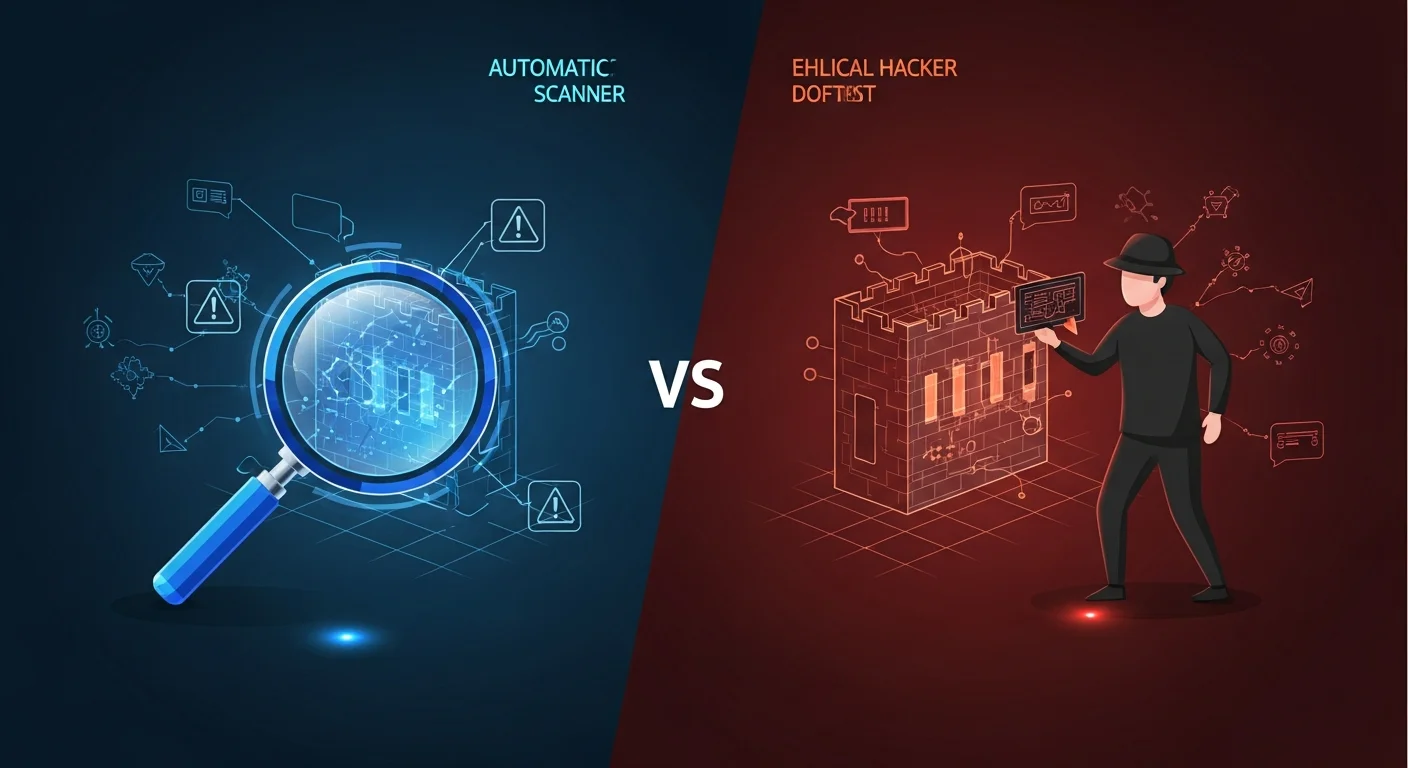
Your organization runs quarterly vulnerability scans. You get a report with hundreds, sometimes thousands, of findings. Your team patches what they can and moves on. Six months later, you bring in a penetration testing firm, and they walk right through your defenses using a chain of "medium-severity" vulnerabilities no one prioritized.
Sound familiar? The confusion between vulnerability assessment and penetration testing costs organizations real money and real exposure every year. These two security testing methods serve fundamentally different purposes, and getting the distinction wrong creates gaps that attackers exploit. Modern vulnerability assessment tools help teams continuously discover weaknesses before validation or penetration testing begins.
This guide breaks down exactly how vulnerability assessments and penetration tests differ, when to use each, and why leading security programs are moving beyond both toward continuous threat exposure management.
What Is a Vulnerability Assessment?
A vulnerability assessment is a systematic, largely automated process that identifies, classifies, and prioritizes known security weaknesses across your IT environment. Think of it as a comprehensive inventory of what could be wrong with your systems, networks, and applications.
The process typically follows four stages:
- Asset discovery and scoping — Catalog all systems, endpoints, cloud instances, and applications within the target environment.
- Automated scanning — Deploy tools that probe assets against known vulnerability databases like the Common Vulnerabilities and Exposures (CVE) list.
- Analysis and scoring — Assign severity ratings using the Common Vulnerability Scoring System (CVSS), ranging from 0 to 10.
- Reporting and remediation guidance — Deliver a prioritized list of findings with recommended fixes.
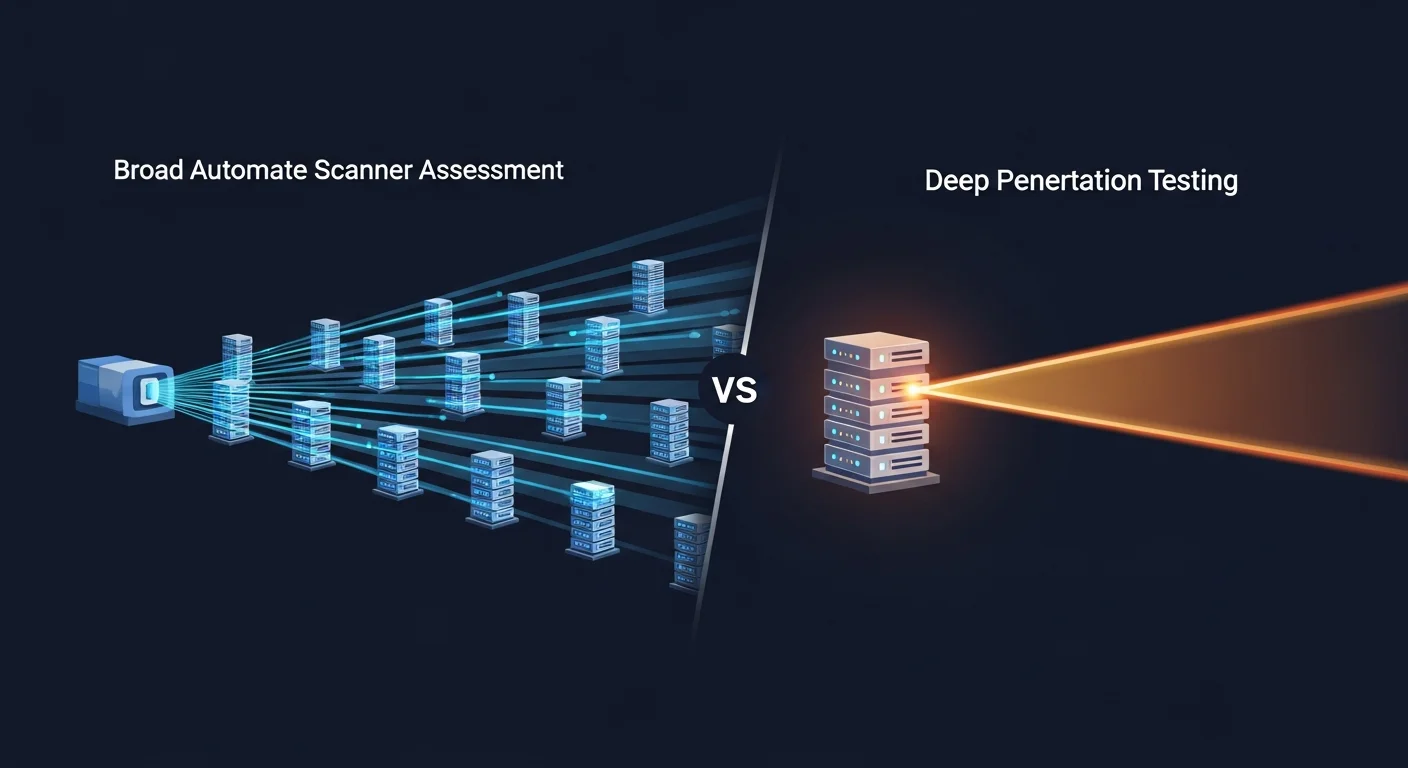
Vulnerability assessments excel at breadth. They can scan thousands of assets in a single engagement and flag issues like unpatched software, misconfigured firewalls, outdated protocols, and default credentials.
What they cannot do is tell you whether those findings are actually exploitable in your specific environment. A CVSS 9.8 vulnerability behind three layers of compensating controls may pose less real risk than a CVSS 5.0 issue on an internet-facing asset with no monitoring.
What Is Penetration Testing?
Penetration testing (pen testing) is a controlled, manual security engagement where ethical hackers actively attempt to exploit vulnerabilities to demonstrate real-world impact. Where vulnerability assessments ask "what might be wrong?", penetration tests answer "what can an attacker actually do?"
A typical penetration test follows this methodology:
- Planning and reconnaissance — Define rules of engagement, scope, and objectives. Gather intelligence on the target.
- Exploitation — Manually attempt to exploit discovered vulnerabilities, chain weaknesses, escalate privileges, and move laterally through systems.
- Post-exploitation — Determine what data or systems an attacker could access after initial compromise.
- Reporting — Document successful attack paths, business impact, and proof-of-concept evidence.
Penetration testing excels at depth. It validates whether vulnerabilities are genuinely exploitable, eliminates false positives through real-world testing, and demonstrates the business impact of a successful breach.
The tradeoff: pen tests are labor-intensive, expensive (typically $15,000 to $100,000+ per engagement), and cover a narrow scope. You cannot pen test your entire infrastructure quarterly. Most organizations run them annually or after major changes.
Vulnerability Assessment vs Penetration Testing: Side-by-Side Comparison
The differences between these two approaches span objectives, methodology, frequency, and outcomes. Here is a direct comparison:
AttributeVulnerability AssessmentPenetration TestingPrimary GoalIdentify and list known vulnerabilities (breadth)Exploit vulnerabilities to prove real-world impact (depth)MethodologyPrimarily automated scanning against CVE databasesPrimarily manual, human-driven exploitationScopeBroad — can cover thousands of assetsNarrow — focused on specific systems or objectivesFrequencyContinuous, weekly, or monthlyAnnual or semi-annualFalse PositivesCommon — scanners flag potential issues without validationMinimal — if it cannot be exploited, it is not reportedAttack ChainingNot evaluatedCore focus — testers chain multiple weaknessesBusiness ImpactAssumed based on CVSS scoresDemonstrated through proof-of-conceptCompliance ValueSatisfies scanning requirements (PCI DSS 11.3.1)Satisfies pen test requirements (PCI DSS 11.4)CostLower — $5,000 to $25,000 per engagementHigher — $15,000 to $100,000+ per engagementSkill RequiredModerate — tool operators and analystsHigh — experienced ethical hackers (OSCP, CEH)OutputPrioritized vulnerability list with CVSS scoresNarrative report with attack paths and business impactTimelineDays to a weekOne to four weeks
The key distinction: vulnerability assessments tell you what doors might be unlocked; penetration tests tell you which ones an attacker can actually walk through and what they can steal.
When to Use a Vulnerability Assessment
Vulnerability assessments are the right choice when you need:
- Ongoing security hygiene — Regular scans that identify new vulnerabilities as they emerge across your environment.
- Broad asset coverage — Visibility into weaknesses across your entire infrastructure, not just a subset.
- Patch prioritization — A ranked list of findings to guide remediation efforts.
- Compliance evidence — Documentation for frameworks that require regular vulnerability scanning, such as PCI DSS, HIPAA, and SOC 2.
- Baseline establishment — An initial inventory of your security posture before deeper testing.
Most mature security programs run vulnerability assessments on a continuous or monthly cycle. They form the foundation of any vulnerability management program.
When to Use Penetration Testing
Penetration testing is the right choice when you need:
- Exploitability validation — Proof that specific vulnerabilities can be leveraged in a real attack scenario.
- Compliance with pen test mandates — PCI DSS 11.4, certain HIPAA requirements, FedRAMP, and cyber insurance policies increasingly require validated testing.
- Pre-launch security assurance — Testing new applications, infrastructure changes, or cloud migrations before they go live.
- Attack path analysis — Understanding how an attacker could chain multiple weaknesses to reach critical assets.
- Board-level risk communication — Concrete evidence of what a breach would look like to justify security investment.
Organizations that integrate Breach and Attack Simulation (BAS) alongside periodic pen tests can extend the value of adversarial testing between manual engagements.
Why You Need Both (And Why Both Are Not Enough)
The vulnerability assessment vs penetration testing debate has a straightforward answer: you need both. They are complementary, not competing methodologies.
A vulnerability assessment without penetration testing gives you a list of potential problems with no real-world validation. A penetration test without vulnerability assessments means you are testing blind, potentially missing weaknesses the pen tester did not specifically target.
The recommended approach:
- Run continuous or monthly vulnerability assessments across your full environment.
- Conduct annual (or semi-annual) penetration tests against your most critical systems.
- Use BAS tools for ongoing adversarial validation between pen test engagements.
But here is the challenge most security teams face: even with both practices in place, you are still operating reactively. Vulnerability scanners produce thousands of findings. Pen tests produce a detailed report that is outdated within weeks as your environment changes. Neither approach tells you which of your vulnerabilities are being actively targeted by threat actors right now.
This is where Continuous Threat Exposure Management (CTEM) enters the picture.
Moving Beyond Assessment: The Case for Continuous Threat Exposure Management
Gartner introduced the CTEM framework to address a core limitation of traditional vulnerability assessment and penetration testing: both are point-in-time activities in a threat landscape that changes daily.
CTEM creates a continuous cycle of five stages:
- Scoping — Define the attack surface and business-critical assets.
- Discovery — Identify vulnerabilities, misconfigurations, and exposures across all environments.
- Prioritization — Rank findings based on threat intelligence, asset criticality, and exploitability, not just CVSS scores.
- Validation — Confirm exploitability through BAS, attack path analysis, and adversarial simulation.
- Mobilization — Orchestrate remediation across security and IT operations teams.
This approach incorporates the strengths of both vulnerability assessments (continuous discovery) and penetration testing (exploitability validation) into an ongoing program rather than isolated engagements.
For security leaders managing the gap between what vulnerability scanners report and what actually matters, platforms like Uni5 Xposure unify data from your existing scanning tools, enrich findings with threat intelligence, and focus remediation on the top 3% of risks that threat actors are actively exploiting.
The result: instead of triaging thousands of vulnerability assessment findings or waiting for the next annual pen test, your team operates with a continuously updated, threat-informed view of what actually needs to be fixed.
How to Build a Complete Security Testing Strategy
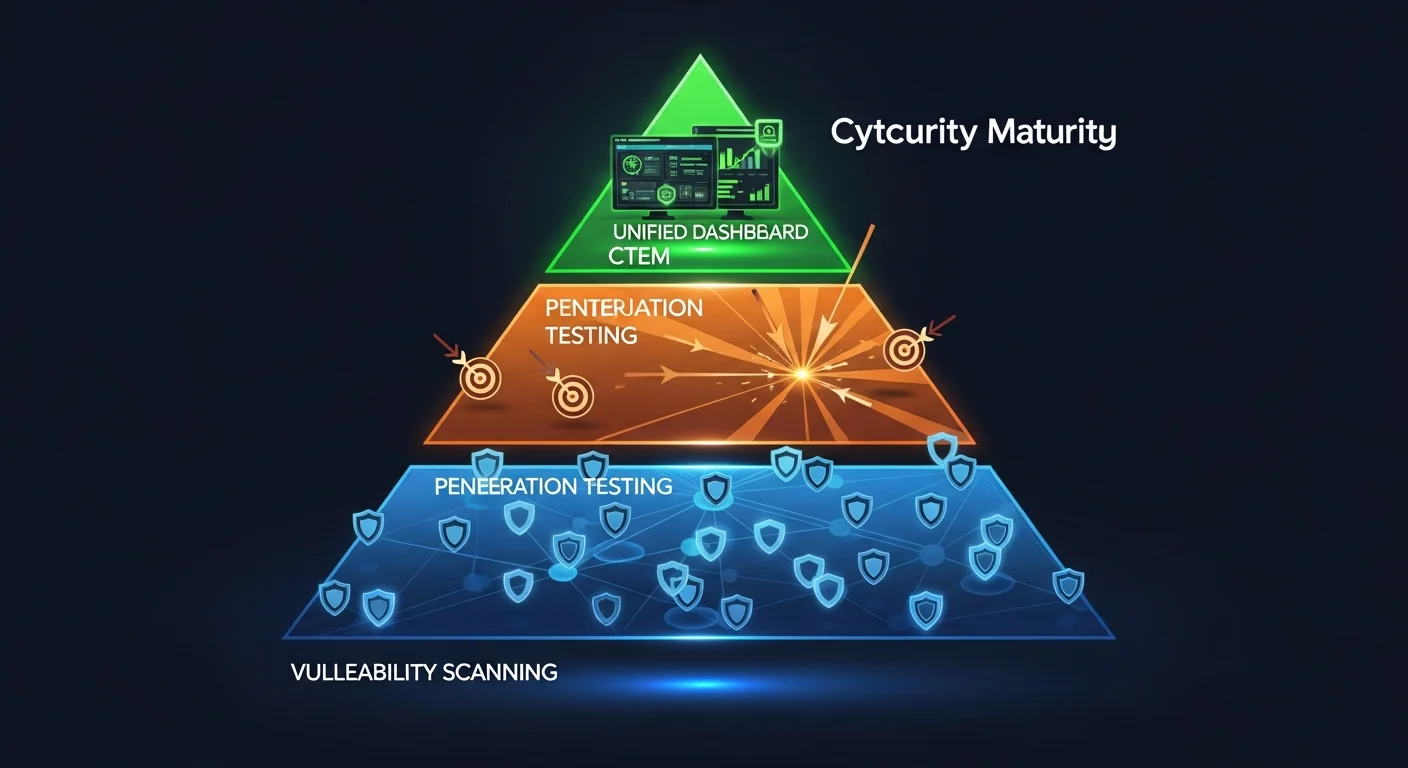
A practical security testing strategy layers vulnerability assessment, penetration testing, and continuous exposure management based on your organization's maturity:
Level 1: Foundation
- Quarterly vulnerability assessments across all assets
- Annual penetration test on critical systems
- Patch management based on CVSS severity
Level 2: Maturing
- Monthly or continuous vulnerability scanning
- Semi-annual penetration tests with expanded scope
- BAS tools for ongoing validation between pen tests
- Threat intelligence integration for prioritization
Level 3: Advanced (CTEM)
- Continuous exposure assessment across the full attack surface
- Automated prioritization based on threat intelligence, asset criticality, and exploitability
- Ongoing adversarial validation (BAS + attack path analysis)
- Orchestrated remediation workflows with SLA tracking
- Real-time dashboards for executive risk reporting
Moving from Level 1 to Level 3 does not require replacing your existing vulnerability assessment tools or stopping penetration tests. It means building a continuous layer on top of them that transforms isolated findings into actionable, prioritized remediation.
Frequently Asked Questions
What is the difference between a vulnerability assessment and a penetration test?
A vulnerability assessment is an automated scan that identifies known security weaknesses across a broad set of assets. A penetration test is a manual, hands-on exercise where ethical hackers attempt to exploit vulnerabilities to prove real-world impact. Assessments focus on breadth and discovery; pen tests focus on depth and validation.
Is a vulnerability assessment enough for compliance?
It depends on the framework. PCI DSS requires both vulnerability scanning (Requirement 11.3.1) and penetration testing (Requirement 11.4) as separate, non-interchangeable controls. HIPAA, SOC 2, and FedRAMP also have specific expectations around validated testing. Check your compliance requirements carefully.
How often should I run vulnerability assessments vs penetration tests?
Vulnerability assessments should run continuously or at least monthly. Penetration tests are typically conducted annually or semi-annually, and after major infrastructure changes, application releases, or mergers and acquisitions.
Can automated tools replace penetration testing?
No. Automated scanners cannot detect business logic flaws, chained multi-step attack paths, or social engineering vectors. They also cannot adapt their approach based on what they discover during testing. Penetration testing requires human judgment and creativity that automated tools cannot replicate.
What is CTEM and how does it relate to vulnerability assessment and pen testing?
Continuous Threat Exposure Management (CTEM) is a framework that combines continuous vulnerability discovery with ongoing exploitability validation and threat-informed prioritization. It incorporates the strengths of both vulnerability assessments and penetration testing into a continuous program, rather than relying on periodic point-in-time engagements.
Key Takeaways
Vulnerability assessment and penetration testing are both essential, but they serve different purposes. Assessments give you breadth and continuous visibility. Pen tests give you depth and real-world validation. Neither alone is sufficient for managing risk in today's threat landscape.
The organizations that get this right are not choosing one over the other. They are building continuous threat exposure management programs that integrate both methodologies with threat intelligence and automated prioritization, so their teams focus on the vulnerabilities that matter most rather than drowning in unvalidated findings.
The question is not whether you need vulnerability assessments or penetration testing. It is whether your security program connects the output of both into a continuous, actionable view of your real exposure.





.svg)