Comprehensive Threat Exposure Management Platform
 Critical Threat Research : Middle-East at WAR: The Rapidly Escalating Iranian Cyber Threat Download the Report Critical Threat Research : Middle-East at WAR: The Rapidly Escalating Iranian Cyber Threat Download the Report
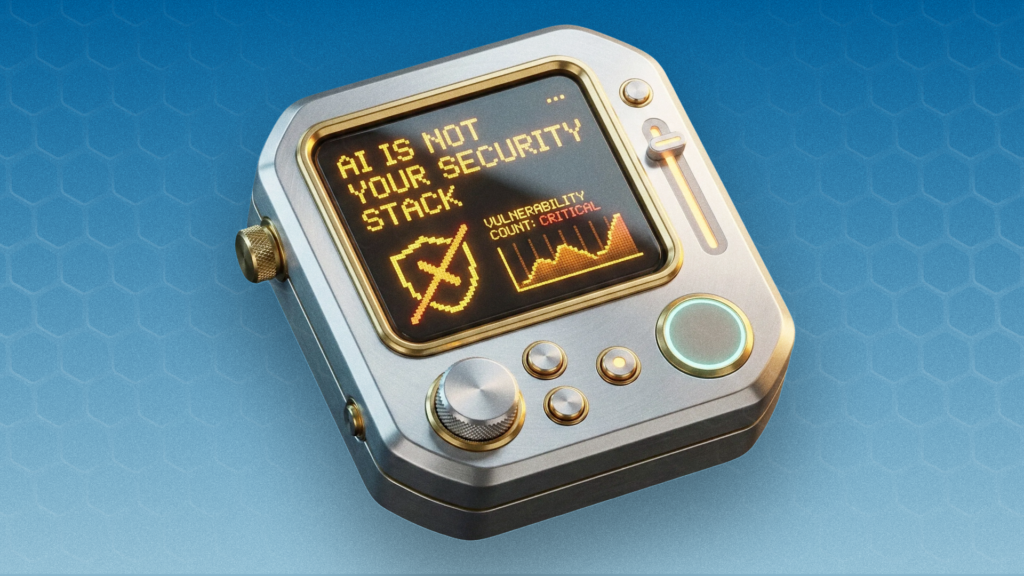
There’s a debate I keep hearing in security circles: now that large language models like Claude are so capable, do we still need dedicated cybersecurity tools? I understand the appeal of the question. AI can summarize threat reports, help write detection logic, interpret vulnerability advisories, and generate incident narratives faster than any analyst. That’s genuinely useful. But conflating analyst augmentation with operational security control is a dangerous category error — and one I think the industry needs to address plainly.
Security operations are not a knowledge-retrieval problem. They are a real-time, sensor-dependent, adversarially-contested problem. IBM’s 2024 Cost of a Data Breach Report put the global average breach cost at USD 4.88 million, with a mean time to identify and contain of 277 days. The gap is not in analysis. It’s in operational visibility, prioritization, and continuous validation — none of which a language model can provide on its own.
The limitations here aren’t bugs that future model versions will fix. They’re architectural:
The question is not whether AI is useful in security — it clearly is. The question is whether AI reasoning can substitute for operational instrumentation. The evidence suggests it cannot.
Industry frameworks — CISA’s CDM, Gartner’s Continuous Threat Exposure Management (CTEM) cycle, NIST CSF 2.0 — converge on four capabilities that every mature security program must operationalize. CTEM isn’t a buzzword; it’s a recognition that security posture is a continuous process, not a point-in-time assessment.
Your attack surface changes every day. Verizon’s 2024 DBIR found that the median time from CVE publication to active exploitation is approximately five days — inside most enterprise patch cycles. Continuous, automated discovery of internet-facing assets — including shadow IT and misconfigured cloud resources — isn’t optional. HivePro’s ASM module does this from the outside in, mapping your asset footprint the way an adversary would see it, and feeding those findings directly into remediation workflows.
The NVD recently catalogued over 29,000 CVEs in a year. No team can remediate all of them — so the question is which ones to fix first. CVSS scores are a poor guide: a critical-severity finding on an air-gapped system is far less urgent than a medium-severity finding on an externally-accessible authentication service. Effective prioritization layers exploitability data, active threat intelligence, asset criticality, and business context together. CISA’s Known Exploited Vulnerabilities catalog is instructive here — only a small fraction of published CVEs are ever actively weaponized. CTEM-aligned, risk-based prioritization keeps remediation focused on that subset.
I’ll give AI its due here: it’s genuinely useful for synthesizing threat reports and making advisories readable. What it can’t do is ingest thousands of live sources — government advisories, ISACs, dark web forums, commercial feeds — and automatically map findings to my specific asset inventory to surface which of my 312 geographically-distributed devices is running the vulnerable appliance version from Tuesday’s advisory. That requires instrumented integration between live feeds and a live asset inventory. That’s what HivePro’s threat intelligence layer delivers.
This is where the AI substitution argument collapses most visibly. Whether my controls work against a specific technique can only be determined by running that technique against them. Breach and Attack Simulation (BAS) does exactly that — continuously, automatically, safely — validating EDR, email security, IAM resilience, network segmentation, and cloud posture against real MITRE ATT&CK techniques, not once a year but every day. Ponemon found that organizations doing continuous security validation experience 35% fewer security incidents than those relying on point-in-time testing. And with SEC disclosure rules and NIS2 now requiring demonstrable control efficacy — not just documented controls — continuous BAS data has become the audit trail that compliance demands.
| Capability | AI Model Alone | CTEM Platform (HivePro) |
|---|---|---|
| Threat intelligence | Static; no real-time ingestion | Continuous ingestion from CVE, ISAC, gov., dark web feeds |
| Asset discovery | None — no environmental instrumentation | Continuous outside-in ASM with live inventory |
| Vulnerability prioritization | Can describe CVSS; cannot apply live business context | Risk-based: exploitability + threat intel + asset criticality |
| Control validation | Can describe attack techniques; cannot simulate them | Automated BAS mapped to MITRE ATT&CK, production-safe |
| Regulatory evidence | No audit trail of actual control efficacy | Continuous efficacy reporting for auditors and insurers |
Table 1. AI model capabilities vs. a dedicated CTEM platform.
“Security programs operating from a unified exposure management foundation reduce mean time to remediation by an average of 42%, compared to programs relying on point-solution approaches.”
— Enterprise Strategy Group, 2025 CTEM Adoption Study
The research is consistent: organizations that operationalize the full CTEM stack — continuous discovery, risk-based prioritization, live threat intelligence, and automated control validation — have materially better security outcomes than those that don’t. The reason is simple: they’ve closed the gap between what they think their security posture is and what it actually is.
AI has a real role in that ecosystem — augmenting the analysts working within it. But it doesn’t replace the operational foundation those analysts depend on. If I’m advising a security leader on where to start, the answer is: build the CTEM foundation first, then layer in AI-assisted analysis on top of it. Doing it the other way around is how organizations end up with a false sense of security and a very expensive breach.