 Critical Threat Research : The Iranian Cyber War Intensifies!

Comprehensive Threat Exposure Management Platform
Organizations today face a relentless barrage of cyber threats, yet most lack a clear understanding of their own security posture. Security posture management provides the framework and discipline to continuously assess, measure, and improve your organization’s overall cybersecurity readiness. This guide breaks down what security posture management is, how to assess your current posture, the frameworks that drive it, and how modern platforms like Uni5 Xposure enable continuous posture improvement.
Your organization’s security posture is the overall strength of its cybersecurity defenses at any given point in time. It encompasses every element that contributes to protecting your digital assets: the policies you enforce, the technologies you deploy, the controls you maintain, and the processes your teams follow.
Think of security posture as a snapshot of your readiness to prevent, detect, and respond to cyber threats. A strong cybersecurity posture means your organization has:
A weak security posture, on the other hand, leaves critical gaps: unpatched systems, misconfigured cloud resources, unknown assets, and security controls that have never been validated against actual threats.
Security posture management is the continuous process of evaluating, monitoring, and improving your organization’s cybersecurity defenses. Unlike one-time audits or periodic assessments, security posture management treats posture improvement as an ongoing discipline.
It bridges the gap between knowing you have vulnerabilities and actually doing something about them, in a prioritized, measurable way.
Effective security posture management includes:
Cloud Security Posture Management (CSPM) is a subset of the broader security posture management discipline. CSPM focuses specifically on identifying misconfigurations and compliance violations in cloud infrastructure (AWS, Azure, GCP).
While CSPM is critical for organizations with cloud workloads, it only addresses one dimension of your attack surface. A comprehensive security posture management strategy must also account for on-premises infrastructure, endpoints, applications, identities, and the connections between them.
Organizations that rely solely on CSPM may have excellent visibility into cloud misconfigurations yet remain blind to vulnerabilities in their on-premises systems or gaps in their security controls.
A security posture assessment is the foundational step in understanding where your organization stands. Here is a structured approach:
You cannot protect what you cannot see. Start by building a comprehensive inventory of all assets:
Modern attack surface management tools automate this discovery process, continuously scanning for new assets and changes to existing ones.
Deploy vulnerability scanners that cover your entire technology stack. Most organizations use multiple tools: network scanners, application security testing (SAST/DAST), container scanners, and cloud configuration auditors.
The challenge is not finding vulnerabilities. It is consolidating findings from these disparate tools into a unified view. Organizations typically deal with tens of thousands of vulnerability findings from multiple scanners, each with different severity ratings and formats.
Raw vulnerability counts are meaningless without context. Effective security posture assessment requires prioritization based on:
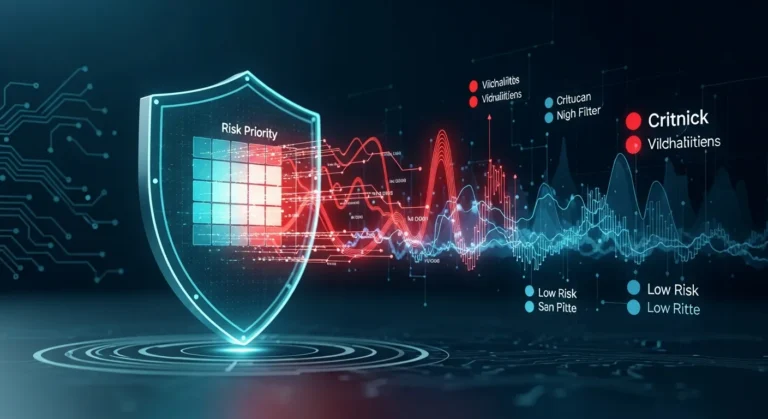
This is where threat-informed prioritization transforms a list of 50,000 vulnerabilities into a focused set of 1,500 that actually require immediate attention.
Finding vulnerabilities is one thing. Knowing whether your security controls would actually stop an attacker from exploiting them is another.
Breach and attack simulation (BAS) tests your defenses by safely simulating real-world attack techniques mapped to frameworks like MITRE ATT&CK. This validation step tells you not just what is vulnerable, but what is exploitable given your current defensive posture.
Close the loop by:
The NIST CSF provides a structured approach to managing cybersecurity risk across five core functions: Identify, Protect, Detect, Respond, and Recover. Security posture management maps directly to these functions:
| NIST CSF Function | Security Posture Management Activity |
|---|---|
| **Identify** | Asset discovery, vulnerability scanning, risk assessment |
| **Protect** | Security controls implementation, configuration hardening |
| **Detect** | Continuous monitoring, anomaly detection, threat intelligence |
| **Respond** | Remediation orchestration, incident response |
| **Recover** | Posture restoration, lessons learned, resilience improvement |
NIST CSF 2.0 added a sixth function, Govern, emphasizing that security posture management must be driven by organizational leadership and aligned with business objectives.
Gartner’s Continuous Threat Exposure Management (CTEM) framework represents the evolution of security posture management from periodic assessments to a continuous, threat-driven discipline.
CTEM operates through five stages:
What makes CTEM different from traditional vulnerability management is the validation step. Instead of assuming that every high-severity CVE is equally dangerous, CTEM uses breach and attack simulation and attack path analysis to determine which exposures actually put the organization at risk.
Gartner predicted that by 2026, organizations prioritizing a continuous exposure management program would be three times less likely to suffer a breach. This underscores why cyber threat exposure management is becoming the standard for enterprise security teams.
ISO 27001 provides a systematic framework for establishing, implementing, and maintaining an information security management system (ISMS). For security posture management, ISO 27001 is particularly relevant because it requires:
Organizations pursuing ISO 27001 certification often use security posture management platforms to automate the evidence collection and compliance reporting these requirements demand.
Most organizations still approach security posture management with fragmented tools and manual processes. Here is why that fails:
The average enterprise uses 6 to 10 different vulnerability scanners and security assessment tools. Each produces its own findings in its own format with its own severity ratings. Without a platform to normalize, deduplicate, and correlate these findings, security teams drown in data while lacking actionable insight.
Teams that prioritize remediation based solely on CVSS scores waste enormous effort on vulnerabilities that pose minimal real-world risk. CVSS does not account for whether a vulnerability is being actively exploited, whether compensating controls exist, or whether the affected asset is business-critical.
Research consistently shows that only 2-5% of vulnerabilities are ever exploited in the wild. Treating all “critical” CVEs equally leads to patch fatigue and misallocated resources.
Most organizations find vulnerabilities and patch them without ever testing whether those vulnerabilities were actually exploitable, or whether the patches actually worked. This creates a false sense of security. Your posture looks good on paper, but you have never tested it against realistic attack scenarios.
Finding vulnerabilities is fast. Fixing them is slow. Without automated remediation workflows that route the right information to the right teams with the right priority, vulnerabilities sit in backlogs for months while your organization remains exposed.
Uni5 Xposure was built to solve these exact challenges. As a threat exposure management platform, it implements the full CTEM framework end-to-end, transforming fragmented vulnerability management into continuous security posture improvement.
Uni5 Xposure aggregates and normalizes vulnerability data from all your existing scanners (Tenable, Qualys, Snyk, Rapid7, and more) into a single pane of glass. No more toggling between dashboards or manually correlating findings. You get one deduplicated, enriched view of your exposure.
The platform’s Unictor engine goes beyond CVSS scores. It enriches every vulnerability with real-time threat intelligence from HiveForce Labs, factoring in:
The result: your team focuses on the top 3% of risks that actually matter, rather than chasing thousands of “critical” vulnerabilities that will never be exploited.
Uni5 Xposure maps how vulnerabilities can be chained together to breach critical assets, then validates those paths through breach and attack simulation. This gives you empirical evidence of your security posture, not assumptions.
When a vulnerability requires action, Uni5 Xposure creates tickets in tools like Jira and ServiceNow with step-by-step remediation guidance. No more vague alerts. Technicians get exactly what they need to fix the issue, reducing MTTR and eliminating the back-and-forth between security and IT ops.
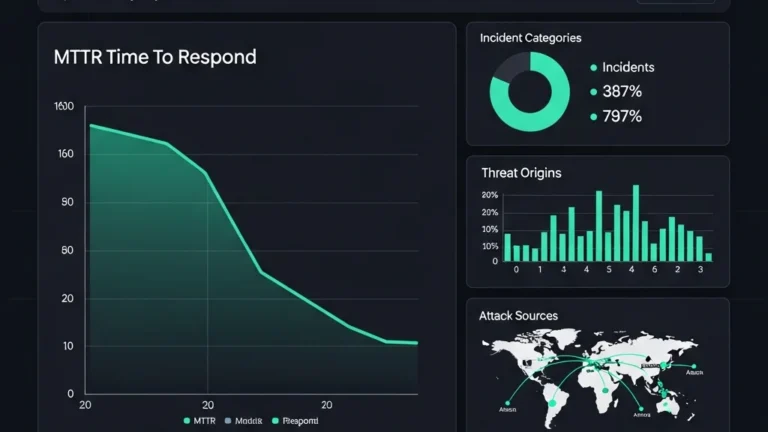
Real-time dashboards show your security posture across every dimension: by business unit, by environment, by compliance framework. Leadership gets clear metrics on risk reduction, remediation velocity, and posture trends over time.
Stop guessing about your security posture. Get continuous visibility with Uni5 Xposure. Book a demo.
Security posture is the current state of your organization’s cybersecurity defenses at a given moment. Security posture management is the continuous process of assessing, monitoring, and improving that posture over time. Think of posture as the snapshot and posture management as the discipline of making that snapshot better every day.
Continuous assessment is the gold standard. Traditional quarterly or annual audits leave dangerous gaps. Modern platforms enable real-time posture monitoring so that new vulnerabilities, misconfigurations, and exposures are identified and prioritized as they emerge, not months later.
Cloud Security Posture Management (CSPM) focuses specifically on identifying misconfigurations and compliance violations in cloud infrastructure. It is a subset of the broader security posture management discipline, which also covers on-premises systems, applications, identities, and the full attack surface.
CTEM (Continuous Threat Exposure Management) improves security posture by adding a validation layer that traditional vulnerability management lacks. Rather than assuming every vulnerability is equally dangerous, CTEM uses breach and attack simulation to test which exposures are truly exploitable, allowing teams to focus remediation on the threats that matter most.
Security posture management is not a project with a finish line. It is a continuous discipline that determines whether your organization can withstand the threats it faces every day. The organizations that invest in continuous, threat-informed posture management, backed by frameworks like CTEM and platforms designed for end-to-end exposure management, are the ones that reduce their risk of breach by orders of magnitude.
If your team is still managing security posture through spreadsheets and disconnected scanners, explore how a unified approach can transform your vulnerability management program into a true continuous posture management discipline.