July 1, 2020

Is the answer to cyber resilience more security analysts or security automation?


Is the answer to cyber resilience more security analysts or security automation?

Attackers are evolving everyday with new tactics, techniques, and procedures to launch sophisticated attacks and it seems defence is becoming impossible day by day with the existing blend of people, process, and technology. Under these circumstances arises a question about how we accelerate the journey of cyber resilience from unplanned to planned, reactive to proactive and experimental to experience based.

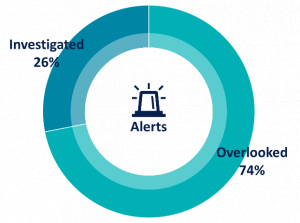
Deficit cybersecurity skills is forcing business to explore new ways of optimizing security. Battling a fleet of cannons is not possible with swords and spears, similar is the battle with cyberattacks which makes automation vital. Ever changing threat landscape requires vigilance and resilience and to thrive, we need to adapt. Studies suggest that a cyberattack is launched every few seconds and therefore, it is essential to empower security defence with automatic detection, investigation, response, and recovery. On an average, a security team investigates nearly 26% of the total alerts generated however, with automation, this could be increased drastically which leads to strengthening the security posture of the organization.
Juggling between different tools, technologies, processes, compliance requirements, etc, overwhelms security teams. They spend a significant amount of time doing routine and repetitive tasks and are swept away from the core strategic and analytical functions of security. Cybersecurity Automation takes away the mundane tasks and brings agility, thus increasing efficiency of the security teams.
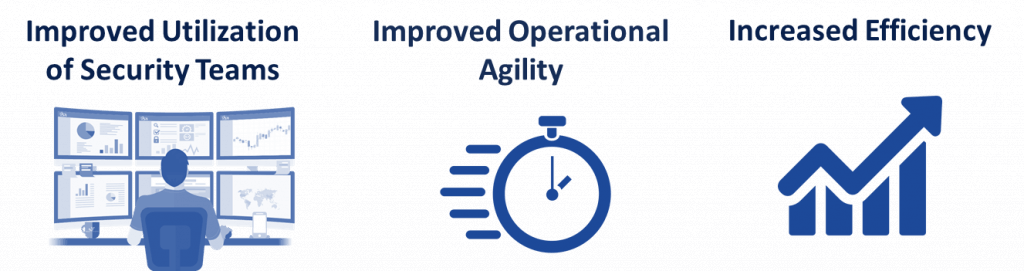
The entire threat mitigation life cycle including identification, protection, detection, response, and recovery can be automated enabling security analysis perform more valuable tasks such as threat hunting, forensics, and strategic planning.

Driving threat mitigation with automation helps in reduction of response time to cyberattacks which increases your cyber resilience.

Author: Purvi Garg

Recent Resources

Dive into our library of resources for expert insights, guides, and in-depth analysis on maximizing Uni5 Xposure’s capabilities
Security team connecting vulnerability scan findings to exposure priorities

Nessus vs Tenable: What Security Teams Should Know

Nessus vs Tenable explained for security teams: compare product scope, scanning use cases, prioritization context, and remediation workflows.
Read More
Security team reviewing safeguards for agentic AI workflows

Agentic AI Security: A Practical Guide to Safer Autonomous Workflows

Learn how to secure agentic AI with least-privilege access, guardrails, observability, testing, and human approval for safer enterprise workflows at scale.
Read More
Enterprise security team reviewing AI-assisted threat and exposure signals

AI Threat Detection for Proactive Exposure Management

Learn how AI threat detection supports exposure discovery, risk prioritization, validation, and response while preserving explainability and human oversight.
Read More
Enterprise security team evaluating vulnerability prioritization software through connected attack paths

Vulnerability Prioritization Software: Rank Risk Beyond CVSS

Vulnerability prioritization software ranks exposure using exploit activity, asset criticality, and business context to move beyond CVSS-only queues today.
Read More
Enterprise security team mapping identity attack surface exposure

Identity Attack Surface Management: Enterprise Guide

Learn what identity attack surface management covers, where access risk hides, and how teams can evaluate discovery, prioritization, and remediation.
Read More
Enterprise security team evaluating vulnerability assessment coverage and remediation workflows

Vulnerability Assessment Platform: Enterprise Guide

Learn how to evaluate a vulnerability assessment platform for enterprise coverage, threat context, validation, reporting, and remediation workflows.
Read More

What’s new on Hive Pro?

Get through updates and upcoming events, and more directly in your inbox

Reduce real exposure. Not just vulnerability volume.