 Critical Threat Research : The Iranian Cyber War Intensifies!

Comprehensive Threat Exposure Management Platform
Enterprise risk management teams can no longer afford to treat cybersecurity as a siloed function. Continuous threat monitoring tools give ERM professionals the real-time data they need to quantify cyber risk, satisfy compliance mandates, and report to the board with confidence. This review breaks down six platforms purpose-built for that mission.
See how Uni5 Xposure bridges security operations and enterprise risk management →
Traditional enterprise risk management relied on periodic assessments: annual audits, quarterly reviews, and point-in-time vulnerability scans. That approach worked when IT environments changed slowly. It does not work now.
Modern organizations run hybrid cloud infrastructure, deploy containers daily, and face threat actors who weaponize vulnerabilities within hours of disclosure. The gap between periodic assessments and real-time risk creates blind spots that boards and regulators can no longer accept.
Continuous threat monitoring tools solve this by feeding live threat and vulnerability data into the enterprise risk picture. Instead of working from stale spreadsheets, ERM teams get dynamic risk scores that reflect what is actually happening across the attack surface right now.
The shift matters for three reasons:
Evaluating these tools from an ERM perspective differs from a pure security operations lens. ERM professionals should prioritize:
The tool should translate technical vulnerability data into business risk language. Raw CVSS scores mean little to a board of directors. Look for platforms that factor in asset criticality, threat actor activity, exploit availability, and compensating controls to produce contextual risk scores that map to business impact.
ERM teams manage multiple compliance obligations simultaneously. The tool should map findings directly to frameworks like NIST CSF, ISO 27001, SOC 2, HIPAA, and PCI DSS, enabling automated evidence collection and audit readiness without manual translation.
Continuous threat data only becomes useful for enterprise risk management when it flows into the organization’s GRC (governance, risk, and compliance) platform. Look for native integrations with ServiceNow GRC, RSA Archer, MetricGRC, or similar platforms, plus API access for custom integrations.
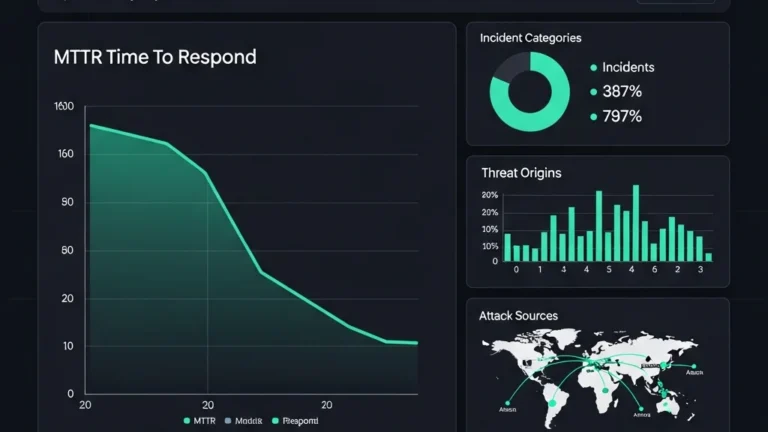
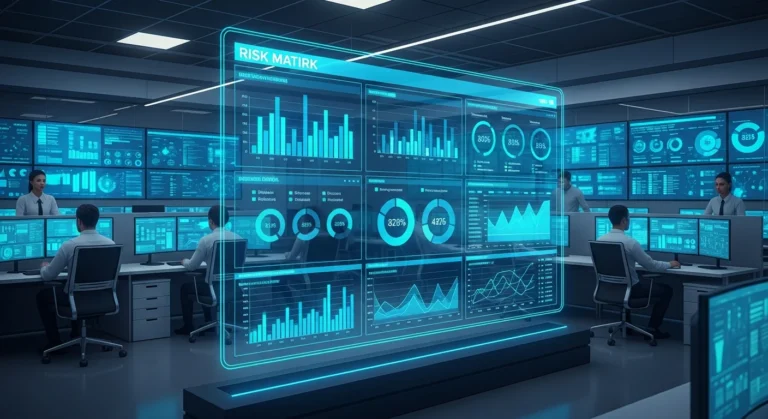
The tool should generate executive dashboards and risk reports that non-technical stakeholders can understand. Mean time to remediate (MTTR), exposure trends, SLA compliance, and risk reduction over time are the metrics boards care about.
ERM teams need confidence that the monitoring covers the full attack surface: on-premises infrastructure, cloud environments, containers, web applications, mobile assets, and external-facing services. Gaps in coverage equal unquantified risk.
Identifying risk is only half the equation. The tool should also facilitate remediation through automated ticket creation, workflow orchestration, and integration with IT service management platforms like Jira and ServiceNow.
Uni5 Xposure is a continuous threat exposure management (CTEM) platform that operationalizes all five stages of Gartner’s CTEM framework: Scope, Discover, Prioritize, Validate, and Mobilize. For ERM teams, its strength lies in combining real-time threat intelligence with business-context risk scoring.
ERM-Relevant Capabilities:
Best for: Organizations that want to unify scattered vulnerability data from multiple security tools into a single risk-quantified view and need validated exposure data for board-level reporting.
Learn more about Uni5 Xposure →
MetricStream takes a GRC-first approach to continuous threat monitoring, integrating cyber risk into its broader enterprise risk management platform. The platform connects IT risk assessments with operational and third-party risk in a unified framework.
ERM-Relevant Capabilities:
Best for: Large enterprises in regulated industries (banking, energy, healthcare) that need cyber risk management deeply integrated with their existing GRC program.
ServiceNow Security Operations extends the platform’s ITSM capabilities into security, providing continuous vulnerability monitoring with native integration into the organization’s GRC and risk management workflows.
ERM-Relevant Capabilities:
Best for: Organizations already using ServiceNow for ITSM that want to extend their investment into continuous security monitoring and risk management.
Tenable One consolidates vulnerability management, cloud security, and attack surface management into an exposure management platform with enterprise risk quantification capabilities.
ERM-Relevant Capabilities:
Best for: Organizations that need broad vulnerability coverage across complex environments and want a single exposure score for board-level reporting.
RSA Archer has long been a staple in enterprise GRC, and its IT and Security Risk Management module extends that foundation into continuous cyber risk monitoring.
ERM-Relevant Capabilities:
Best for: Organizations with mature GRC programs that want to add continuous cyber risk monitoring to their existing RSA Archer deployment.
Rapid7 combines vulnerability management (InsightVM) with security orchestration (InsightConnect) to deliver continuous threat monitoring with automated response capabilities.
ERM-Relevant Capabilities:
Best for: Mid-to-large organizations looking for a combined vulnerability management and orchestration solution that bridges security operations and risk reporting.
| Feature | Hive Pro Uni5 | MetricStream | ServiceNow | Tenable One | RSA Archer | Rapid7 |
|---|---|---|---|---|---|---|
| Native CTEM framework | ✅ Full 5-stage | ❌ GRC-first | ❌ ITSM-first | Partial | ❌ GRC-first | Partial |
| BAS/validation | ✅ Integrated | ❌ | ❌ | ❌ | ❌ | ❌ |
| Risk quantification | ✅ Unictor AI | ✅ AI-powered | ✅ Analytics | ✅ CES score | ✅ Quant/qual | ✅ Real Risk |
| GRC integration | API + ITSM | ✅ Native | ✅ Native | API | ✅ Native | API |
| Multi-scanner aggregation | ✅ 50+ sources | ❌ | Limited | ✅ Native | ❌ | ✅ Native |
| Board reporting | ✅ Dashboards | ✅ Heat maps | ✅ Analytics | ✅ Lumin | ✅ Reports | ✅ Custom |
| Threat intelligence | ✅ HiveForce Labs | Third-party | Third-party | ✅ Research | Third-party | ✅ Research |
Selecting a continuous threat monitoring tool for ERM requires matching the tool’s strengths to your organization’s risk maturity and existing technology stack.
If your GRC platform is the center of gravity, start with tools that integrate natively. MetricStream, RSA Archer, and ServiceNow excel when the organization’s risk management workflows already run on their platforms.
If you need to aggregate data from multiple security tools, prioritize platforms with broad data ingestion. Hive Pro’s Uni5 Xposure stands out here, ingesting data from 50+ scanners alongside its own native scanning capabilities. This eliminates the coverage gaps that create unquantified risk for ERM teams.
If validation matters as much as detection, look for integrated breach and attack simulation. Knowing a vulnerability exists is different from knowing it is exploitable in your specific environment. Validated risk data gives ERM teams and boards far more confidence in risk quantification than theoretical scores alone.
If you are starting from scratch, consider continuous threat exposure management as the framework. CTEM encompasses monitoring as one stage within a broader lifecycle, giving ERM teams a structured approach to scope, discover, prioritize, validate, and mobilize against threats.
ERM teams do not need to overhaul their entire risk program overnight. A phased approach works:
Ready to unify your threat data for enterprise risk management? Explore Uni5 Xposure →
Continuous threat monitoring provides real-time or near-real-time visibility into threats, vulnerabilities, and exposures across the full attack surface. Periodic vulnerability scanning runs at scheduled intervals (weekly, monthly, quarterly), creating gaps where new threats go undetected. For ERM teams, continuous monitoring delivers the dynamic risk data needed for accurate risk quantification, while periodic scanning produces point-in-time snapshots that may be outdated before they reach the risk register.
Continuous monitoring tools provide live dashboards with metrics like mean time to remediate, exposure reduction trends, SLA compliance, and risk scores tied to business impact. This gives boards real-time visibility into cyber risk posture rather than relying on quarterly summaries. Tools with risk quantification capabilities can translate technical findings into financial impact estimates that directors and officers understand.
No. Continuous threat monitoring tools and GRC platforms serve complementary functions. Monitoring tools generate the real-time threat and vulnerability data, while GRC platforms provide the governance framework, risk register, compliance workflows, and audit management. The most effective approach integrates both so threat data automatically feeds the enterprise risk picture.
Several frameworks explicitly call for continuous monitoring: NIST SP 800-137 defines a continuous monitoring strategy, NIST CSF 2.0 includes monitoring across its Protect and Detect functions, ISO 27001:2022 requires monitoring of information security controls, and SEC cyber disclosure rules (effective 2024) expect timely identification and reporting of material cyber incidents. PCI DSS 4.0 and HIPAA also include continuous monitoring expectations for covered entities.