Comprehensive Threat Exposure Management Platform
Attackers don’t care about your compliance reports or the sheer number of vulnerabilities you have. They look for a single, exploitable path to your most valuable assets. To defend effectively, you need to see your organization through their eyes. This is the core principle behind continuous threat exposure management (CTEM). Instead of just scanning for weaknesses, this proactive framework helps you identify and validate the complete attack paths adversaries are most likely to use. By simulating real-world threats and understanding how different exposures connect, you can find and fix your most critical security gaps before an attacker ever gets the chance to exploit them.
If you feel like you’re constantly playing catch-up with security threats, you’re not alone. Traditional vulnerability management often leaves teams with a mountain of alerts and not enough context to know where to start. This is where Continuous Threat Exposure Management (CTEM) comes in. Introduced by Gartner, CTEM is a modern security framework designed to help organizations get ahead of attackers. It’s a strategic process that moves beyond simply scanning for vulnerabilities and instead focuses on continuously identifying, prioritizing, and validating the exposures that pose a real threat to your business.
Think of it as a shift from a defensive checklist to an offensive strategy. Instead of just patching every vulnerability that pops up, a CTEM program helps you see your organization through an attacker’s eyes. It connects the dots between a vulnerability on a server, a misconfiguration in the cloud, and a critical business asset, showing you the most likely attack paths. This isn’t about generating another long list of problems; it’s about providing a clear, contextualized view of your risk. By adopting this continuous, five-stage cycle, you can align your security efforts with business risk and focus your resources on fixing the problems that truly matter. This proactive approach is at the heart of a modern Threat Exposure Management Platform.
For years, security teams have been stuck in a reactive loop: scan, find thousands of vulnerabilities, and then struggle to figure out which ones to fix first. This approach is noisy and inefficient. CTEM changes the game by moving security from a reactive to a proactive stance. Instead of just asking, “What are our vulnerabilities?” it asks, “What are our most critical exposures that an attacker is likely to exploit?”
This focus on exploitable attack paths is what makes CTEM so powerful. It aligns security work directly with business impact, ensuring your team isn’t wasting time on low-risk issues. By understanding which weaknesses threaten your most important assets, you can prioritize remediation efforts and stay ahead of attackers, strengthening your security posture over time.
At its core, CTEM is a comprehensive and cyclical process built on a few key principles. It’s not a one-time project but an ongoing program that enables you to continuously monitor and reduce your threat exposure. The framework is structured around five distinct but interconnected stages: Scoping, Discovery, Prioritization, Validation, and Mobilization.
The main idea is to create a repeatable loop that constantly refines your understanding of your attack surface and security gaps. This structured approach ensures you’re not just finding problems but also validating that your fixes work and mobilizing the right teams to take action. It’s about building a sustainable security rhythm that adapts as your environment and the threat landscape evolve.
If you’ve been in cybersecurity for a while, you know the drill with traditional vulnerability management: scan your assets, get a massive list of CVEs, and then try to figure out what to patch first. It’s a necessary process, but it often feels like you’re just treading water. You’re busy, but are you actually reducing risk? This is where Continuous Threat Exposure Management (CTEM) changes the conversation.
CTEM isn’t just a new name for the same old thing. It’s a fundamental shift from a reactive, list-based approach to a proactive, continuous cycle. Instead of just identifying vulnerabilities, CTEM focuses on understanding your true exposure—the real-world attack paths that adversaries could actually use to harm your business. It connects the dots between a vulnerability on a server, a misconfiguration in the cloud, and an active threat in the wild. Think of it as moving from a flat map of your vulnerabilities to a 3D model of your actual risk landscape. This approach helps you focus your resources on the threats that pose an immediate and credible danger, letting you get ahead of attackers instead of just cleaning up after them.
Traditional vulnerability management programs often operate in silos. The network team runs its scans, the cloud team has its own tools, and the app sec team is doing something else entirely. This creates a fragmented view of risk that’s hard to piece together. The result is often a reactive, check-the-box security posture where teams are overwhelmed by a sea of low-context alerts. They spend their days chasing CVEs with high CVSS scores that have little to no chance of being exploited in their environment. This approach is not only inefficient, but it also leaves dangerous gaps that attackers can slip through. It fails to answer the most important question: “What are the few things we can fix right now to make the biggest impact on our security?”
Unlike the periodic, snapshot-in-time nature of traditional scanning, CTEM is a continuous, looping process. It’s not a one-and-done project; it’s a strategic framework designed to constantly adapt to your changing environment. This cycle involves five key stages: scoping, discovery, prioritization, validation, and mobilization. By continuously iterating through these phases, you create a feedback loop that steadily improves your security posture. This always-on approach ensures you’re not just finding vulnerabilities but are also validating that your fixes work and that your security controls are effective against real-world threats. It transforms vulnerability management from a frantic patching race into a measured, strategic program for proactive exposure reduction.
This is where CTEM truly shines. Instead of relying solely on static vulnerability data, a CTEM program integrates real-time threat intelligence to add crucial context. It answers questions like: Is this vulnerability being actively exploited in the wild? Are threat actors using it to target my industry? Does it sit on a critical asset that’s part of a known attack path? By layering in data from sources like HiveForce Labs, you can see which exposures pose a clear and present danger. This allows you to prioritize remediation efforts based on actual threats, not just theoretical severity scores. It’s the difference between knowing a window is unlocked and knowing a burglar is walking up your driveway.
A Continuous Threat Exposure Management (CTEM) program isn’t a one-off project; it’s a living, breathing cycle that adapts to your changing environment. Think of it as a strategic loop that moves your security posture from reactive to proactive. Instead of just patching vulnerabilities as they appear, you’re systematically identifying, prioritizing, and validating your exposures based on real-world threats. This framework breaks down the massive task of securing your organization into five clear, manageable stages. Each stage builds on the last, creating a continuous feedback loop that helps you make smarter, faster security decisions and prove that your defenses are actually working. By adopting this cyclical approach, you can stay ahead of attackers and focus your resources on the risks that truly matter to your business.
Before you can protect your assets, you have to know what you’re protecting and why it matters. The scoping stage is all about defining your battlefield. This means you need to “decide what parts of the network are most important to protect and what the business goals are for security.” This isn’t just about listing every server and laptop; it’s about identifying your “crown jewels”—the critical systems, applications, and data that are essential to your business operations. By aligning your security efforts with business priorities from the start, you ensure your team is focused on protecting what has the most value and impact. This foundational step provides the context needed for every other stage in the CTEM cycle, from discovery to remediation.
Once you know what you need to protect, the next step is to find out how it could be attacked. The discovery stage involves a comprehensive and continuous scan of your entire environment to “find all the actual weaknesses and gaps in the network.” This goes beyond traditional vulnerability scanning. A modern Total Attack Surface Management approach looks at everything—from on-premise servers and cloud instances to web applications and IoT devices—to create a complete inventory of your assets and their associated exposures. Because your attack surface is constantly changing with new devices and software, this discovery process must be continuous. It’s about maintaining a real-time, accurate picture of all potential entry points for an attacker.
Discovery will likely uncover thousands of potential vulnerabilities, and you can’t fix them all at once. That’s where prioritization comes in. This stage is about cutting through the noise to focus on what’s most urgent. The key is to “decide which weaknesses matter most by figuring out how likely they are to be attacked.” This means moving beyond CVSS scores and incorporating real-world threat intelligence. Is a vulnerability being actively exploited in the wild? Does it affect one of the critical assets you identified in the scoping stage? An effective vulnerability and threat prioritization strategy combines asset criticality, vulnerability severity, and active threat intelligence to surface the handful of risks that require immediate attention.
You have firewalls, EDRs, and a host of other security tools in place, but are they configured correctly and working as intended? The validation stage answers this critical question. Here, you “use simulations (like fake attacks) to see if weaknesses can actually be used by attackers and if your current defense plans would stop them.” This is where Adversarial Exposure Validation techniques like Breach and Attack Simulation (BAS) come into play. By safely simulating real-world attack paths, you can test your security controls against the same tactics attackers use. This process provides concrete evidence of where your defenses are strong and, more importantly, where the gaps are, allowing you to fix them before they can be exploited.
Finding and prioritizing vulnerabilities is only half the battle; the final stage is all about getting them fixed. Mobilization focuses on streamlining the remediation process to “help teams fix the problems found by making it easier to get approvals, implement changes, and deploy fixes.” This often means breaking down the silos between security, IT, and DevOps teams. A successful CTEM program provides clear, actionable guidance and integrates with existing ticketing and workflow systems to make remediation as frictionless as possible. By closing the loop and ensuring fixes are deployed efficiently, you tangibly reduce your organization’s exposure, strengthening your security posture before the cycle begins again.
A CTEM program is only as good as the intelligence that fuels it. Without a clear understanding of the threat landscape, you’re essentially just collecting a massive list of vulnerabilities with no real way to prioritize them. It’s like having a map with thousands of roads but no idea which ones lead to danger. Threat intelligence provides the critical context you need to see which vulnerabilities are not just theoretical weaknesses, but are actively being targeted by attackers right now.
This is where a CTEM program truly separates itself from traditional vulnerability management. Instead of treating every vulnerability as equally urgent, you can focus your resources on the exposures that pose a genuine, immediate threat to your organization. By integrating real-world threat data from sources like our own HiveForce Labs, you can connect the dots between a specific CVE, the threat actors exploiting it, and the potential impact on your critical assets. This transforms your security strategy from a reactive guessing game into a proactive, intelligence-driven operation. It allows you to answer the most important question: “What do I need to fix first to make the biggest impact on reducing our risk?”
The threat landscape changes by the minute. A vulnerability that was low-risk yesterday could become the target of a widespread campaign today. Threat intelligence gives you that real-time visibility. It acts as your early warning system, alerting you to emerging threats, new malware variants, and active campaigns targeting your industry or technology stack. This allows you to continuously monitor and assess your attack surface against what’s happening in the wild, not just against a static database of known vulnerabilities. By staying informed with up-to-date threat advisories, your team can respond quickly and decisively to the threats that are currently active, ensuring you’re always one step ahead.
Your security team has limited time and resources. They can’t possibly fix every single vulnerability that pops up on a scan. The hard truth is, they don’t have to. Attackers tend to follow the path of least resistance, repeatedly using a smaller subset of known and exploitable vulnerabilities. Threat intelligence helps you identify this subset. It provides the data to perform effective vulnerability and threat prioritization, distinguishing between a theoretical weakness and a vulnerability with a known, public exploit that attackers are actively using. This allows you to filter out the noise and concentrate your remediation efforts on the issues that attackers are most likely to leverage, dramatically improving your efficiency and reducing your true exposure.
A vulnerability score on its own is just a number. It doesn’t tell you who might exploit it, how they would do it, or what they might be after. Threat intelligence adds that crucial real-world context. It helps you understand the tactics, techniques, and procedures (TTPs) of different threat actors and maps them to the vulnerabilities present in your environment. This allows you to see your organization through an attacker’s eyes and understand the complete attack path they might take. By validating your security controls against these real threats, you can move beyond theoretical risk scores and build a defense that is tailored to counter the adversaries most likely to target you.
Knowing you have vulnerabilities is one thing; knowing if they can actually be exploited is another. This is where Breach and Attack Simulation (BAS) becomes a critical part of your CTEM program. Think of it as a sparring partner for your security controls. Instead of waiting for a real punch, you can safely and continuously test your defenses against the latest attack techniques. BAS moves you beyond theoretical risk scores and into the practical reality of your security posture.
A CTEM program isn’t complete without a validation stage, and that’s exactly what BAS provides. It helps you answer the tough questions: Are our security tools configured correctly? Can an attacker move laterally through our network? Will our detection and response capabilities actually work when an incident occurs? By running these automated simulations, you get a clear, evidence-based picture of where your defenses are strong and where they need improvement. This continuous feedback loop is essential for making your security program more resilient, and Hive Pro’s approach to adversarial exposure validation integrates this testing directly into your exposure management cycle.
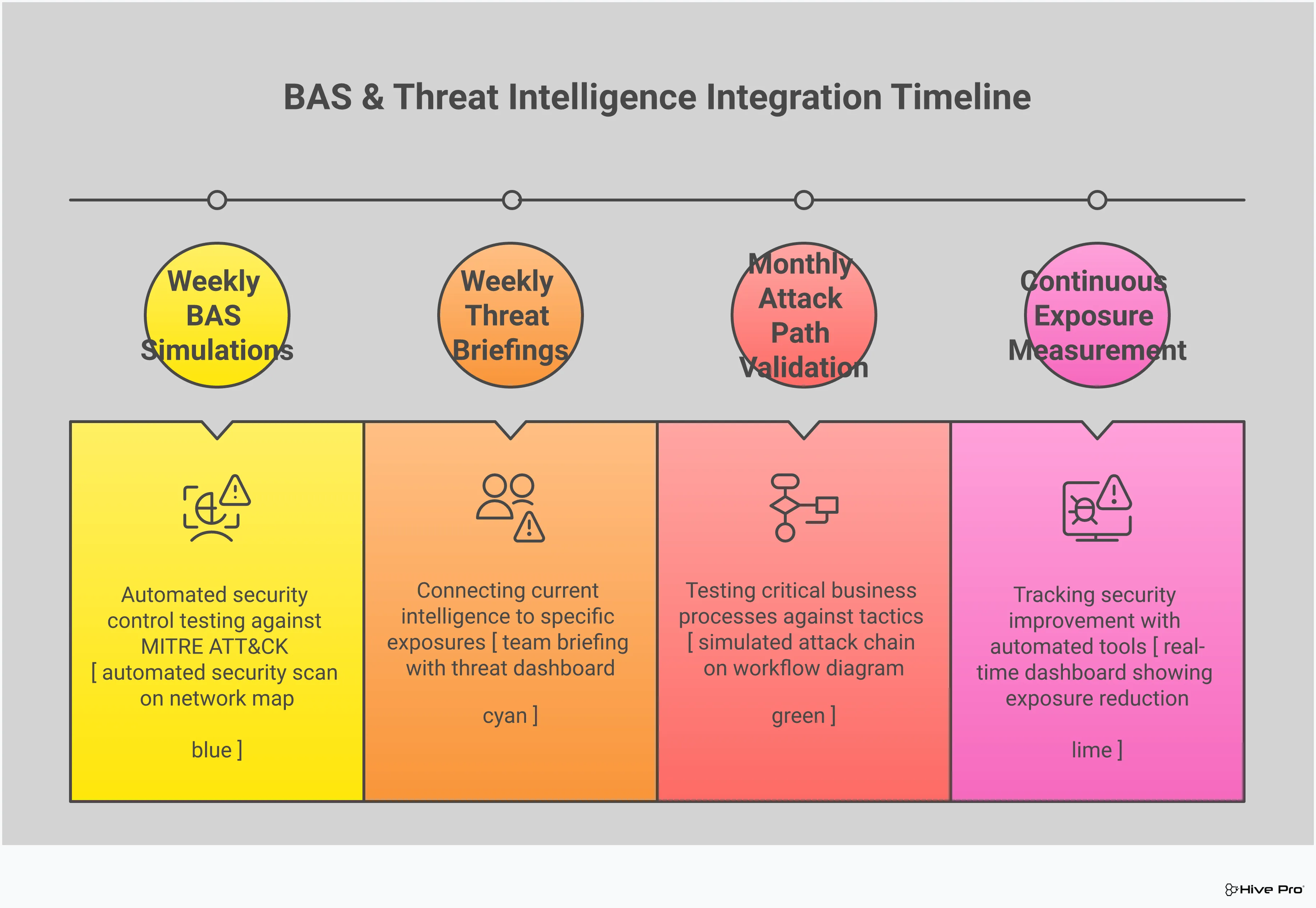
The best way to prepare for an attack is to see how your systems hold up against one. Breach and Attack Simulation platforms allow you to do just that by running controlled, simulated attacks based on the tactics, techniques, and procedures (TTPs) used by actual threat actors. This isn’t just a port scan or a vulnerability check; it’s a full-scale test of your defensive stack. BAS helps you validate your security posture by showing you whether a known vulnerability could lead to a full-blown breach. It can reveal if your endpoint detection and response (EDR) tool would catch a malicious payload or if your firewall would block command-and-control traffic, giving you real-world proof of your security effectiveness.
Attackers don’t just look for a single vulnerability; they look for a path of least resistance through your entire environment. BAS helps you find these paths first. It continuously evaluates your security landscape, identifying weaknesses not just in your external-facing systems but also in your internal processes, user permissions, and application behaviors. This proactive approach helps you spot misconfigurations, overly permissive access rights, or gaps in network segmentation that a traditional vulnerability scanner might miss. By simulating attacker movements, you can identify weaknesses across your technology, people, and processes, allowing you to close those gaps before they can be exploited in a real incident.
One of the biggest challenges in cybersecurity is demonstrating progress. How do you prove that your efforts are actually making the organization safer? Implementing BAS as part of your CTEM strategy provides clear, measurable outcomes that show the impact of your work. Instead of just reporting on the number of patches deployed, you can show how remediation efforts have successfully blocked a simulated ransomware attack. This allows you to track your progress in reducing cyber risk over time. These concrete metrics are invaluable for communicating the value of your security program to leadership and for justifying future investments in your security stack.
A successful CTEM program isn’t about buying a single, magical tool. It’s a strategic approach powered by an integrated set of technologies working in concert. Think of it as a security orchestra, where each instrument plays a critical part in creating a complete picture of your threat exposure. When these tools are brought together, they create a continuous feedback loop that moves your security program from a reactive checklist to a proactive, intelligence-driven operation. This integration is what allows you to see your entire attack surface, understand which vulnerabilities truly matter, test your defenses against real-world attacks, and focus your remediation efforts where they will have the greatest impact. The goal is to break down the silos between different security functions and create a unified view of risk. Let’s look at the core components that make this possible.
You can’t protect what you don’t know you have. That’s the fundamental principle behind Attack Surface Management. ASM is the discovery phase of CTEM, where you continuously identify and map every single asset connected to your organization. This includes everything from servers and laptops to cloud instances, IoT devices, and forgotten subdomains. A robust Total Attack Surface Management solution provides the comprehensive visibility needed to understand your organization’s digital footprint. It’s the foundation upon which the entire CTEM cycle is built, ensuring that no stone is left unturned and no potential entry point is overlooked. Without a complete and current inventory of your assets, any security effort is just guesswork.
Once you have a clear map of your attack surface, you’ll likely find a long list of vulnerabilities. Trying to fix everything at once is impossible and inefficient. This is where vulnerability prioritization tools come in. Instead of relying solely on static CVSS scores, these tools add layers of critical context. They help you focus on the exposures that pose a genuine threat by considering factors like active exploitation in the wild, the business criticality of the affected asset, and whether a vulnerability is part of a known attack path. This intelligence-driven approach allows your team to direct its limited resources toward the fixes that will actually reduce risk, making your vulnerability and threat prioritization efforts far more effective.
Discovering a vulnerability is one thing; knowing if it’s truly exploitable in your specific environment is another. Breach and Attack Simulation (BAS) platforms answer this crucial question. These tools act as a virtual red team, safely and continuously testing your security controls against the latest real-world attack techniques. By simulating attacks, you can validate whether your defenses—like firewalls, EDR, and security policies—are configured correctly and working as intended. This adversarial exposure validation moves you beyond assumptions and provides concrete proof of where your security gaps lie. It helps you find and fix exploitable pathways before an actual attacker does.
Threat intelligence is the connective tissue that holds the entire CTEM tech stack together. It provides the real-world context needed to make smart, timely decisions at every stage of the cycle. A strong threat intelligence feed informs your ASM by highlighting attacker-favored assets, enriches your prioritization by flagging vulnerabilities that are actively being exploited, and guides your BAS by providing the latest adversary tactics to simulate. By integrating up-to-the-minute threat advisories, you can shift your focus from theoretical risks to the clear and present dangers targeting your industry. This ensures your security efforts are always aligned with the current threat landscape, not yesterday’s news.
Adopting a CTEM program isn’t just about adding another tool to your security stack. It’s about fundamentally changing how your organization approaches security. Instead of reacting to endless alerts and patching vulnerabilities based on generic severity scores, you can shift to a proactive strategy that’s aligned with your business goals. This approach delivers tangible results that resonate far beyond the security team.
The core idea is to move from a state of constant uncertainty to one of confident action. CTEM provides the clarity to understand what your true exposures are, the intelligence to know which ones matter most, and the validation to be sure your defenses are working. This translates into faster remediation, smarter resource allocation, and a measurable reduction in risk. By connecting security efforts directly to business outcomes, you can finally answer the tough questions from leadership and demonstrate the value your team provides every day. It’s about making your security program more effective, efficient, and resilient.
When your team is staring down a list of thousands of vulnerabilities, it’s easy to feel paralyzed. A CTEM program cuts through that noise. By continuously monitoring your attack surface and enriching vulnerability data with real-time threat intelligence, you can pinpoint the threats that pose an immediate danger. This allows your team to respond more swiftly to emerging threats before they can be exploited. Instead of working through a backlog based on CVSS scores alone, your team gets a prioritized, actionable list of what to fix now, dramatically shortening the time from discovery to remediation.
One of the biggest challenges for security leaders is communicating risk in a way the rest of the business understands. CTEM helps bridge that gap. It provides a unified view of your entire attack surface, connecting technical vulnerabilities to the business assets they could impact. This clarity allows you to frame security risks in terms of potential harm to the company, not just abstract technical details. With a clear, contextualized understanding of your total attack surface, you can have more productive conversations with stakeholders and make more informed decisions about security investments and priorities.
Every security team has to do more with less. A CTEM framework ensures your limited resources—both time and money—are spent where they’ll have the greatest impact. By focusing on the most urgent threats, you stop wasting cycles on low-risk vulnerabilities that attackers are unlikely to ever use. This targeted approach means your team’s efforts are always directed at the most critical issues. Effective vulnerability and threat prioritization not only strengthens your security posture but also maximizes the return on your security investment, making it easier to justify your budget and prove your program’s value.
Ultimately, the goal of any security program is to reduce risk. CTEM makes this a continuous, proactive process rather than a reactive, intermittent one. By constantly discovering exposures, prioritizing them based on real-world threats, and validating your defenses, you create a powerful feedback loop that systematically hardens your environment over time. This ongoing cycle helps you become more proactive and better protected against threats. Instead of just putting out fires, you’re actively building a more resilient organization and achieving a significant, measurable reduction in your overall risk.
Adopting a new security framework is a big move, and like any significant change, it comes with a few hurdles. But knowing what to expect is half the battle. Shifting to a CTEM program involves more than just new software; it’s a change in mindset and process. Let’s walk through some of the common challenges teams face when getting started with CTEM and, more importantly, how you can get ahead of them. By planning for these obstacles, you can ensure a smoother transition and start seeing the benefits of a proactive security posture much faster.
Let’s be direct: a comprehensive program like CTEM requires investment. Because it covers your entire attack surface and integrates multiple security functions, you may need to secure more funding for the right technology and people. The key is to frame the conversation around value, not just cost. Instead of presenting it as another expense, build a business case that highlights the ROI of proactive security. Show how continuously identifying and fixing your most critical exposures prevents costly breaches. A unified Threat Exposure Management Platform can also consolidate your toolset, streamlining operations and potentially reducing long-term costs, making the budget conversation much easier.
A successful CTEM program pulls in data from everywhere—your cloud environments, identity providers, vulnerability scanners, and development tools. Getting all these different systems to communicate effectively can feel like a huge technical challenge. The solution is to find a platform built for integration. Look for a central hub with robust APIs that can connect to your existing security and IT stack to give you a complete, real-time picture of your exposure. This process also requires getting all your stakeholders on the same page. When everyone from security to IT to DevOps agrees on what the program needs to achieve, integrating the tools becomes a shared goal rather than just one team’s problem.
CTEM is a team sport. Fixing security issues involves collaboration across multiple departments, not just your dedicated security team. This can be tough if teams are used to working in silos or if there’s a skills gap. The best way to solve this is by establishing clear, organized processes for remediation. A strong CTEM platform helps by translating complex security data into actionable steps that different teams can understand and own. By creating a shared view of priorities, you can foster better communication and ensure everyone knows their role. This turns remediation from a chaotic scramble into a structured, collaborative effort to reduce risk.
Adopting a Continuous Threat Exposure Management (CTEM) program might seem like a huge undertaking, but you don’t have to boil the ocean. The key is to start with a solid foundation and build from there. By focusing on a few practical steps, you can create a clear path forward that aligns your security efforts with real business outcomes. Think of it less as a complete overhaul and more as a strategic evolution of your existing security practices. It’s about working smarter, not just harder, to get ahead of threats. Here’s how you can get the ball rolling.
Before you dive into any new tools or processes, take a step back and define what you want to achieve. Are you trying to reduce the time it takes to patch critical vulnerabilities? Do you need a better way to prove your security controls are working? Setting specific, measurable goals gives your program direction and helps you justify the investment. Once your goals are clear, you need to define ownership. A successful CTEM program involves collaboration across teams, so make sure it’s clear who is responsible for fixing different types of security weaknesses. This ensures accountability and prevents critical issues from falling through the cracks.
The “continuous” part of CTEM is impossible to achieve manually. Your attack surface is constantly changing, and so are the threats targeting it. Automation is your best friend here. Start by automating the discovery of your assets to get a complete and up-to-date picture of your total attack surface. From there, you can automate vulnerability scanning, prioritization, and even security control validation. The goal is to create a system that continuously watches and checks for security issues, freeing up your team to focus on strategic remediation instead of manual, repetitive tasks. This constant vigilance is what transforms your security posture from reactive to proactive.
You can’t improve what you don’t measure. To show the value of your CTEM program, you need to track the right metrics. Go beyond simply counting vulnerabilities and focus on metrics that reflect a true reduction in risk. Track things like Mean Time to Remediate (MTTR) for critical threats, the percentage of your attack surface that has been recently scanned, and the effectiveness of your security controls against simulated attacks. These data points provide measurable security and business outcomes that you can report to leadership. Using a unified platform to visualize these metrics helps demonstrate progress and makes it easier to secure the resources you need to keep improving.
How is CTEM really different from the vulnerability management I’m already doing? Think of it as a shift in perspective. Traditional vulnerability management often gives you a massive to-do list of CVEs, ranked by a generic score. CTEM changes the question from “What’s vulnerable?” to “How could we actually get breached?” It connects vulnerabilities to your critical business assets and real-world threat intelligence, showing you the most likely attack paths so you can fix what truly puts you at risk first.
Do I need to replace all my current security tools to implement CTEM? Not at all. CTEM is a strategic framework, not a mandate to rip and replace your entire security stack. A strong CTEM platform is designed to integrate with the tools you already have, like your vulnerability scanners and cloud security tools. It acts as a central hub, pulling data from these different sources to give you a single, unified view of your actual exposure.
Is CTEM only for large, enterprise-level organizations? While large enterprises certainly benefit, the core principles of CTEM are valuable for organizations of any size. The goal is to focus limited resources on the most critical risks. A smaller team, in particular, can’t afford to waste time chasing low-priority vulnerabilities. Adopting a CTEM mindset helps any team work smarter by aligning their security efforts with the threats that are most likely to cause real damage.
What’s the most critical part of the CTEM cycle to get right first? The foundational stages of Scoping and Discovery are where you should focus your initial energy. You can’t effectively protect what you don’t know you have, and you can’t prioritize without understanding what’s most important to your business. Taking the time to thoroughly map your attack surface and identify your “crown jewel” assets provides the essential context needed for every other stage to be successful.
How does Breach and Attack Simulation (BAS) fit into the daily routine of a security team? Instead of thinking of it as a one-time penetration test, view BAS as a continuous sparring partner for your defenses. It’s an automated way to constantly ask, “Are we secure right now against the latest threats?” It validates that your security controls are working as expected and confirms that the vulnerabilities you just patched are no longer exploitable. This provides a constant feedback loop to prove your security efforts are making a real difference.