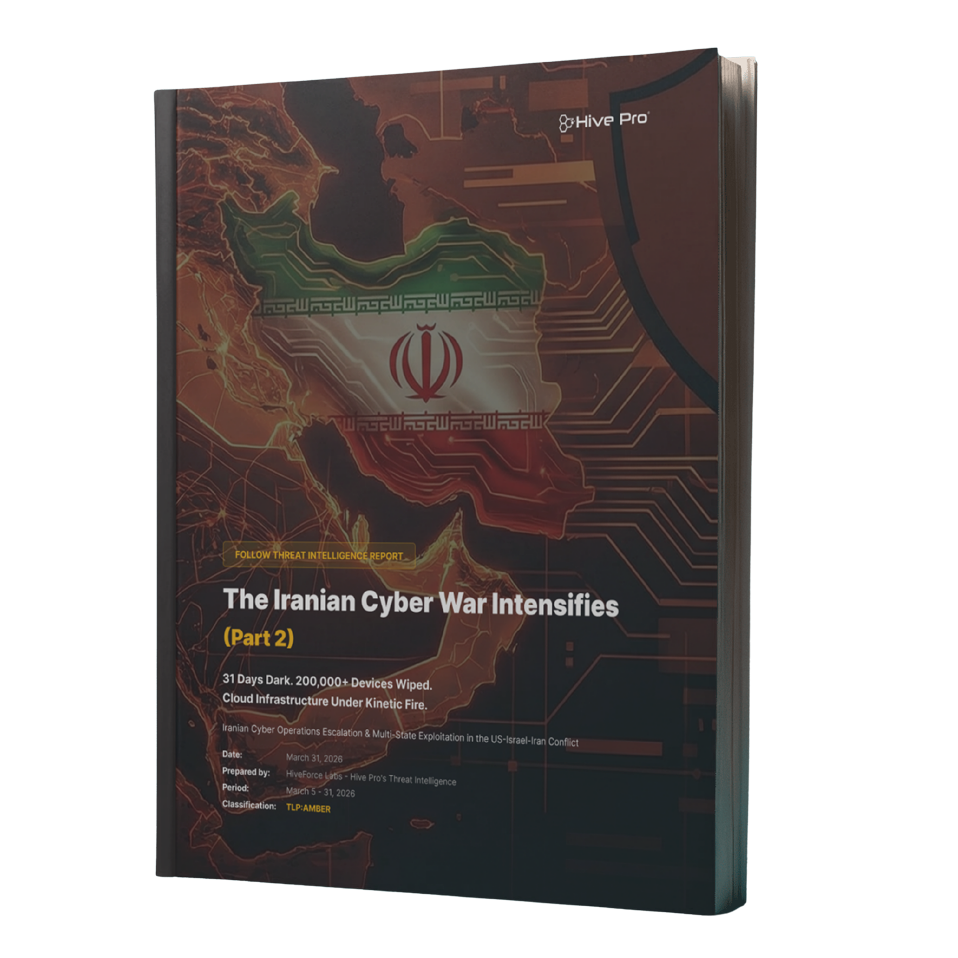
 Critical Threat Research : The Iranian Cyber War Intensifies!


Comprehensive Threat Exposure Management Platform
OT cybersecurity has become a board-level risk because industrial control systems are no longer isolated, predictable, or invisible to attackers. In 2026, security teams protecting manufacturing plants, utilities, transportation systems, energy operations, and other critical environments must defend legacy assets, connected sensors, remote access pathways, supplier integrations, and cloud-linked operational data without disrupting uptime or safety.
See how Hive Pro Uni5 Xposure helps security teams unify OT and IT exposure data, prioritize exploitable risk, and mobilize remediation without adding another disconnected tool.
The hard part is not simply finding more vulnerabilities. Most industrial organizations already have too many findings from scanners, asset inventories, EDR tools, firewalls, network sensors, audits, and compliance reports. The real challenge is deciding which exposures can actually affect operations, which ones threat actors are likely to use, which mitigations are safe for production systems, and which actions can reduce risk fastest.
This article breaks down the biggest OT and ICS security challenges facing industrial organizations in 2026 and explains why exposure management, threat intelligence, and validation are becoming essential to protect cyber-physical environments.
OT cybersecurity protects the systems that monitor and control physical processes. That includes programmable logic controllers, distributed control systems, supervisory control and data acquisition systems, human-machine interfaces, engineering workstations, industrial IoT devices, safety systems, and the networks that connect them.
IT security programs typically optimize for confidentiality, data protection, and user access control. OT security programs must also protect availability, integrity, safety, and process continuity. A delayed patch, a blocked protocol, or an aggressive scan can affect production quality, equipment reliability, or worker safety.
That difference changes nearly every security decision. OT teams often cannot patch on a 30-day cycle. They may depend on vendor-approved maintenance windows, validated firmware, strict change control, and plant shutdown schedules. Many assets run specialized operating systems or proprietary protocols that were never designed for modern authentication, encryption, or endpoint monitoring.
In practical terms, the strongest OT cybersecurity programs do not copy IT processes directly. They adapt security controls to operational reality, then use exposure context to decide where action matters most.
Many industrial control systems were built to run for decades. That durability is valuable for operations, but it creates a difficult security problem. Older controllers, HMIs, historians, and engineering workstations may be unsupported, hard to patch, or dependent on applications that cannot be upgraded without retesting the production environment.
Legacy assets also tend to have incomplete documentation. Security teams may not know which firmware versions are in use, which assets communicate across zones, which vendor accounts still exist, or which devices are exposed through remote access paths. Even when vulnerabilities are known, remediation may require compensating controls rather than direct patching.
For 2026 planning, the priority is not to treat every legacy finding as equal. Teams need to identify which assets are critical to operations, which ones are reachable from higher-risk network segments, which ones have known exploited vulnerabilities, and which ones sit on plausible attack paths to production impact.
Industrial environments increasingly depend on connected systems. Remote monitoring, predictive maintenance, cloud dashboards, analytics platforms, third-party support, and enterprise reporting all create value. They also create new pathways between IT and OT.
Attackers do not need to begin inside a control network to create operational disruption. A compromised identity provider, VPN account, vendor portal, jump server, misconfigured firewall rule, or cloud connector can become a stepping stone into sensitive operational environments. This is why OT security can no longer be managed as a plant-only issue.
A strong 2026 program should map exposure across the full environment: external attack surface, identities, cloud assets, IT infrastructure, OT network zones, remote access tools, and control system dependencies. That broader view is essential because attackers chain weaknesses together. A low-severity issue in one zone can become high-impact when it enables access to a critical operational system.
Hive Pro’s Continuous Threat Exposure Management approach is built around this reality: scope the environment, discover exposures, prioritize what matters, validate attackability, and mobilize remediation as an ongoing program.
You cannot protect what you cannot see, but OT visibility is rarely complete. Passive network monitoring may identify many devices, but it may miss dormant assets, portable engineering laptops, disconnected systems, shadow remote access tools, or assets outside monitored segments. Traditional vulnerability scans may be too risky for sensitive controllers. CMDB data may lag behind plant changes.
The result is fragmented truth. The OT team has one view, IT has another, the SOC has another, and compliance may have a fourth. When an advisory is released or a threat campaign targets a specific technology, teams spend valuable time asking basic questions: Do we have this asset? Where is it located? Is it reachable? Is it business critical? Who owns remediation?
Improving visibility does not mean flooding teams with another inventory dashboard. It means unifying asset context, vulnerability data, network reachability, business criticality, and threat intelligence so defenders can answer operational questions quickly.
Patch management remains one of the most visible ICS security challenges. In enterprise IT, patching is often treated as the default response. In OT, patching may require downtime, vendor coordination, backup plans, regression testing, and approval from operations leadership.
This creates a backlog that can look unacceptable when measured by IT metrics alone. A critical CVE may stay open because the affected system runs a production line that cannot be interrupted. Another system may be patchable only during a quarterly or annual maintenance window. Some devices may never receive a vendor fix.
Security teams need a more nuanced model. The right question is not simply, “Is this CVE critical?” The better question is, “Is this exposure exploitable in our environment, does it affect a critical process, are threat actors using it, and what mitigation reduces risk safely before the next maintenance window?”
Those mitigations may include segmentation, firewall rule changes, access control updates, compensating monitoring, service removal, credential rotation, vendor access restrictions, or temporary isolation. The key is to prioritize based on risk, exploitability, and operational feasibility, not vulnerability severity alone.
Remote access is now a normal part of industrial operations. Vendors troubleshoot equipment, engineers support plants across locations, and operations teams monitor systems from centralized environments. These workflows are efficient, but they introduce persistent access paths that attackers actively target.
Common weaknesses include shared vendor accounts, weak multi-factor authentication, always-on VPN access, unmanaged remote desktop exposure, poorly monitored jump hosts, and unclear ownership of third-party credentials. In OT environments, these issues can be especially dangerous because a remote session may reach systems that directly affect production.
Organizations should treat remote access as an exposure category, not just an identity control. Every path should be inventoried, associated with business purpose, mapped to reachable assets, monitored for abnormal behavior, and reviewed regularly. Access should be time-bound, least-privilege, and segmented from critical control functions wherever possible.
Ransomware groups understand that operational downtime creates pressure. Even when malware does not directly manipulate controllers, attacks on IT systems, engineering workstations, historians, logistics systems, or identity infrastructure can force plants to slow or stop production.
For OT leaders, ransomware defense is not only about backup quality. It is about preventing lateral movement into operational environments, reducing exposed services, securing identities, monitoring high-risk pathways, and validating that critical segmentation controls work as intended.
If your team is prioritizing OT cybersecurity investments for 2026, book a demo with Hive Pro to see how exposure validation and threat-driven prioritization can focus remediation on the risks most likely to disrupt operations.
Breach and attack simulation can be especially useful here. By safely validating whether attacker techniques can traverse the environment, security teams can move beyond assumptions and prove which controls reduce real attack paths. Hive Pro discusses this model in more depth in its guide to BAS in vulnerability management.
Threat intelligence is only valuable when it changes decisions. Many teams receive feeds, advisories, and reports, but struggle to connect that intelligence to their actual environment. An ICS advisory may mention a vulnerable product, but the team still needs to know whether the product exists in their plants, whether it is reachable, whether the exploit is active, and which mitigation is realistic.
In 2026, OT cybersecurity teams need intelligence that is mapped to exposure data. This means correlating vulnerabilities, affected technologies, threat actor activity, exploit availability, asset criticality, and attack paths. Without that correlation, intelligence becomes another alert stream.
Hive Pro’s model is designed to make threat intelligence actionable by enriching exposure data with context from HiveForce Labs, then helping teams focus on vulnerabilities that are being attacked or exploited. For more on this approach, see Hive Pro’s article on using threat intelligence for exposure management.
Industrial organizations face growing pressure from regulators, insurers, customers, and boards. Frameworks and requirements can improve discipline, but compliance checklists do not automatically reduce operational risk. A control can exist on paper while critical exposures remain open in the environment.
This is especially true in OT, where documentation may lag reality and compensating controls may be difficult to verify. Teams need evidence that controls work, that critical assets are known, that high-risk pathways are monitored, and that remediation is moving faster than exposure growth.
The best programs use compliance as a baseline, then layer continuous exposure management on top. That combination helps security leaders show not only that policies exist, but that the organization is reducing reachable, exploitable, business-critical risk over time.
OT cybersecurity is not owned by one team. The CISO, plant leadership, operations engineers, network teams, safety teams, vendors, and executive stakeholders all influence risk. Without shared ownership, remediation slows down because every fix competes with production priorities.
Successful programs create a common language for risk. Instead of presenting long vulnerability lists, they explain which exposures could affect specific plants, production lines, safety functions, or revenue-generating processes. This makes prioritization easier for operations leaders and gives executives clearer evidence for investment decisions.
Metrics should reflect outcomes, not activity alone. Useful measures include reduction in exploitable exposure, remediation time for validated high-risk paths, percentage of critical assets with known ownership, remote access path reduction, segmentation validation coverage, and time to respond to relevant ICS advisories.
Most organizations cannot fix every OT exposure immediately. A practical prioritization model should combine five inputs:
This is where Uni5 Xposure aligns with the way OT teams actually work. The platform unifies exposure data, applies threat intelligence, validates risk through security control validation, and helps teams mobilize remediation across the CTEM lifecycle.
Start with the exposures that connect cyber risk to operational impact. Identify the assets and processes that matter most. Map the pathways that could reach them. Enrich findings with threat intelligence. Validate which controls work. Then mobilize remediation in language operations teams can act on.
A strong 2026 roadmap should include:
Ready to turn OT cybersecurity from a backlog problem into an exposure reduction program? Schedule a Hive Pro demo and see how Uni5 Xposure helps teams prioritize, validate, and mobilize action across complex industrial environments.
The biggest ICS security challenges in 2026 are connected. Legacy systems, IT-OT convergence, incomplete visibility, constrained patching, ransomware pressure, remote access risk, and fragmented ownership all create exposure that cannot be solved by traditional vulnerability management alone.
Industrial organizations need a continuous way to understand what they have, how it can be reached, which threats matter, which controls work, and which actions reduce operational risk fastest. That is the shift from vulnerability counting to exposure management.
For OT environments, this shift is not theoretical. It is the practical path to protect uptime, safety, and resilience while giving security teams a defensible way to prioritize action in a complex, high-stakes environment.