Qualys vs Hive Pro: How They Compare on Key Features


Finding vulnerabilities is only half the battle. How do you know which ones pose a real, immediate threat to your organization? A high CVSS score doesn't always translate to high risk in your specific environment. This is where Breach and Attack Simulation (BAS) comes in, actively testing your defenses by simulating the same techniques attackers use. It shifts your strategy from managing a list of vulnerabilities to validating your security posture against real-world attack scenarios. This proactive validation is a major differentiator. As we explore Qualys vs Hive Pro How they compare, we'll see how Hive Pro’s built-in BAS provides proof of exploitability, while Qualys lacks this core feature, highlighting a fundamental difference in their approaches to risk reduction.
Key Takeaways
- Choose Your Philosophy: Reactive Patching vs. Proactive Exposure Management: Qualys is designed for the traditional cycle of scanning and patching vulnerabilities. Hive Pro offers a modern, proactive approach by providing a continuous view of your entire attack surface, helping you get ahead of threats instead of just reacting to them.
- Focus on Proven Risks, Not Just Potential Threats: Hive Pro’s unified risk score and built-in Breach and Attack Simulation (BAS) show you which vulnerabilities are actually exploitable in your environment. This allows your team to move beyond theoretical CVSS scores and prioritize the fixes that have the biggest impact on your security.
- Unify Your Security Data Without Vendor Lock-In: Hive Pro is built to integrate with your existing security stack, offering over 100 out-of-the-box connections to consolidate data into a single view. This approach avoids the hidden costs and ecosystem restrictions common with other platforms, giving you a complete picture of your risk. If you are comparing multiple incumbents, the Tenable vs Hive Pro comparison shows how another legacy VM platform stacks up. You can also review the Rapid7 vs Hive Pro comparison for a parallel look at exposure management, setup, and threat intelligence differences.
Qualys vs. Hive Pro: What's the Difference?
Choosing the right platform to manage your security posture can feel overwhelming. You have established players like Qualys, known for their long history in vulnerability management, and modern platforms like Hive Pro, which are built for today’s complex threat landscape. While both tools aim to make your organization more secure, they approach the problem from very different angles, which can significantly impact how your team spends its time and resources.
Qualys centers its approach on the traditional cycle of vulnerability management: find the weakness, assess its severity, and patch it. It’s a well-defined, cyclical process that many security teams are familiar with and have built their workflows around for years. This method is effective for maintaining basic security hygiene but can sometimes feel like a never-ending game of whack-a-mole, where new vulnerabilities pop up as soon as old ones are patched.
Hive Pro, on the other hand, operates on a broader framework of Continuous Threat Exposure Management (CTEM). This approach is less about a repeating cycle and more about providing a continuous, unified view of your entire attack surface and the active threats targeting it. Instead of just asking, "What vulnerabilities do we have?" CTEM helps you answer, "What are the most likely ways we'll be attacked, and how can we proactively stop it?" Let’s break down what each platform offers to make this difference clearer.
A Quick Look at Qualys VMDR
Qualys VMDR (Vulnerability Management, Detection, and Response) is an all-in-one solution that consolidates the core functions of a traditional vulnerability management program. It helps your team discover all your IT assets, identify software vulnerabilities through scanning, and manage the patching process to fix them. The platform is known for its accurate scanning capabilities, which help teams identify and address security flaws across their networks and applications. For organizations looking for a single tool to handle the fundamental lifecycle of vulnerability management, Qualys provides a comprehensive and established option that fits well within established security workflows.
A Quick Look at the Hive Pro Uni5 Xposure Platform
Hive Pro offers a next-generation approach with its Uni5 Xposure Platform, which is designed for proactive threat exposure management. Instead of just identifying vulnerabilities, the platform gives you a complete picture of your cyber risk by unifying data from your entire security stack. It provides a single, intuitive risk score that considers business context and active threats. This prioritization is powered by in-house threat intelligence from HiveForce Labs, ensuring your team focuses on the exposures that attackers are actually exploiting. The goal is to move you from a reactive patching cycle to a proactive strategy of reducing your most critical risks. For a role-specific walkthrough, book a demo with Hive Pro and compare your current Qualys workflow against Uni5 Xposure.
How Do Their Core Features Compare?
When you’re evaluating vulnerability management platforms, the core features are what your team will live with day in and day out. It’s not just about checking boxes; it’s about how these tools handle the fundamental tasks of discovering assets, detecting threats, fixing issues, and reporting on your progress. Both Qualys and Hive Pro cover these basics, but their approaches reveal different philosophies about how to best manage cyber risk. Qualys offers a mature, all-in-one system that has been a staple in the industry for years. Hive Pro, on the other hand, provides a more modern, integrated platform designed for proactive threat exposure management. Let's break down how they stack up in four key areas.
Discovering and Scanning Your Assets
A vulnerability management program is only as good as its visibility. You can't protect what you can't see. Qualys VMDR is well-regarded for its comprehensive, all-in-one approach to asset discovery and scanning, making it a solid choice for teams that want a single tool to handle everything from detection to patching.
Hive Pro focuses on providing a complete picture of your total attack surface. It goes beyond just listing assets by giving you a unified view of your exposure across all environments, from on-premise servers to cloud infrastructure. This helps you understand not just what you have, but how it’s all connected and where the real risks lie, which is a foundational step in moving toward continuous threat exposure management.
Assessing and Detecting Vulnerabilities
Once you’ve found your assets, the next step is to find the weaknesses. Qualys has a long history here, but its system uses multiple risk scores, which can sometimes create confusion for teams trying to decide what to fix first.
Hive Pro simplifies this entire process. It’s built to integrate security data from your existing tools, giving you a more complete data set to work with. From there, it provides a single, clear risk score from 1 to 100, making it much easier to understand your priorities at a glance. According to some users, Hive Pro also tends to detect more vulnerabilities than traditional scanners, giving you a more accurate understanding of your true risk posture and helping you focus your vulnerability and threat prioritization efforts.
Patching and Fixing Vulnerabilities
Finding vulnerabilities is one thing; fixing them is another. Qualys is known for helping teams reduce risk, not just find it, with robust patching capabilities that are a core part of its platform. It’s a reliable solution for organizations focused on a traditional patch management cycle.
Hive Pro’s approach is to break down the silos between security and IT operations. The Uni5 Xposure platform gives you a real-time, cross-environment view of your exposure, so you can see how a vulnerability in one area might impact another. This context helps you move beyond simply patching a list of CVEs and start making more strategic decisions about remediation, reducing your overall exposure more effectively.
Monitoring and Reporting on Compliance
Proving your security posture to auditors and leadership is a critical function. With over 6 billion scans performed annually, Qualys has built a reputation for "Six Sigma accuracy," making it a trusted name for compliance reporting. It’s a dependable choice for organizations that need rigorous, scan-based compliance checks.
Hive Pro offers a different, more proactive way to validate your defenses. It includes Breach and Attack Simulation (BAS) as a standard feature, which Qualys VMDR lacks. This allows you to safely simulate real-world attacks to test if your security controls are actually working as expected. This adversarial exposure validation gives you concrete proof that your defenses are effective, which is often more powerful than a clean scan report.
Risk Scoring: How Do Qualys and Hive Pro Differ?
A risk score is more than just a number; it’s the compass that guides your remediation efforts. The right scoring system tells you exactly where to focus your limited time and resources for the biggest impact on your security posture. An unclear or complicated score, however, can lead to confusion and wasted effort, leaving critical risks unaddressed. When you’re trying to decide which vulnerabilities to tackle first, you need a clear, consolidated picture of risk. This is where the approaches of Qualys and Hive Pro diverge significantly, impacting everything from daily workflows to your overall ability to reduce exposure. A scoring system should bring clarity, not complexity, to your team’s daily tasks.
Qualys's Multi-Score System vs. Hive Pro's Simple 1-100 Scale
Qualys VMDR uses multiple scores, like the Qualys Detection Score (QDS) and TruRisk, to quantify threats. While this might seem comprehensive, juggling different scoring systems can create confusion for security teams. When you have multiple metrics to interpret, it’s not always clear which one should take precedence, making it harder to build a straightforward, prioritized list of tasks. This approach can complicate the process of vulnerability and threat prioritization, forcing your team to spend time deciphering scores instead of fixing problems.
Hive Pro simplifies this with a single, intuitive risk score on a 1-100 scale. This unified score is designed for clarity and immediate action. There’s no need to cross-reference different metrics or debate which score matters most. A higher number means higher risk, making it easy for anyone on the team to understand the priority of a given vulnerability at a glance.
How Scoring Affects Your Prioritization
The real value of a risk score lies in the data behind it. Hive Pro’s single score is a composite of multiple critical factors. It considers the technical severity of a vulnerability (CVSS), its age, how easy it is to exploit, and whether it’s being used in active threat campaigns. It also incorporates business context, like the importance of the asset and whether existing security controls can mitigate the threat. This holistic view ensures that the vulnerabilities with the highest scores are genuinely the most critical threats to your specific environment.
With Qualys, because the scores are separated, it can be difficult to get this same unified view. You might have one score indicating a high detection certainty and another indicating a different level of risk, without a clear, consolidated number that accounts for all the contextual factors that Hive Pro bakes in. Effective prioritization requires a single source of truth that weighs all relevant variables, and that’s what a unified score provides.
Which Approach Creates Less Confusion for Your Team?
Ultimately, the goal of a threat exposure management platform is to make your team more effective. A complicated scoring system works against that goal. When your team has to spend cycles interpreting what multiple scores mean, it slows down the entire remediation lifecycle. This complexity can lead to inconsistent prioritization and disagreements about what to fix first. It adds a layer of friction to a process that needs to be as smooth and fast as possible.
Hive Pro’s approach is built to reduce this friction. The Uni5 Xposure platform provides a clear, unambiguous risk score that everyone from a security analyst to a CISO can understand. This simplicity allows your team to align quickly on priorities and move directly to remediation. By eliminating the guesswork, you empower your team to work more confidently and efficiently, ensuring that they are always focused on the threats that pose the greatest danger to your organization.
Integrations: Which Platform Fits Your Security Stack?
No security tool is an island. Your security program likely relies on a whole stack of specialized tools, from endpoint detection and response (EDR) platforms to cloud security scanners and asset management systems. The real power of a threat exposure management platform comes from its ability to connect all those dots. Without seamless integrations, your team is stuck manually correlating data from different dashboards, which leaves you with information silos and dangerous blind spots.
When you’re evaluating a new platform, its ability to connect with your existing tools isn’t just a nice-to-have feature. It’s a critical capability that directly impacts your team’s efficiency and your organization’s overall security posture. A platform that plays well with others allows you to centralize your data, get a true picture of your risk, and make better, faster decisions. Let’s take a look at how Qualys and Hive Pro approach integrating with your broader security ecosystem.
The Hidden Costs of Integrating with Qualys
With Qualys, what you see isn't always what you get. While the core VMDR platform is capable, achieving a truly integrated security view often means purchasing additional Qualys products. For instance, some essential functions require you to add on other modules from their suite, which may not have been part of your initial budget. This à la carte model can lead to frustrating conversations with procurement and unexpected costs down the line. It also pushes you deeper into their ecosystem, which might not be the best long-term fit for your needs, complicating what should be a straightforward process of connecting your security tools.
Hive Pro's 100+ Out-of-the-Box Connections
Hive Pro takes a different approach. Instead of upselling you on more modules, the platform is built to be the central hub for your entire security stack from day one. With over 100 ready-to-use connections, you can immediately start pulling in data from your existing scanners, EDRs, and cloud environments. This means you can unify your security data on a single platform without the hassle of custom development or surprise fees. It’s designed to work with the tools you already have and trust, giving you a comprehensive view of your assets and security controls right out of the box.
How to Consolidate Data Without Vendor Lock-In
One of the biggest concerns for any security leader is vendor lock-in. Committing to one platform can feel restrictive, especially if it forces you to abandon other best-in-class tools you rely on. Hive Pro is designed to prevent this by acting as an open integration layer. It easily consolidates security data from a wide range of tools—including competitors like Tenable and Rapid7 and endpoint solutions like CrowdStrike and SentinelOne. This flexibility means you can maintain a diverse security stack and get a complete view of your attack surface without being tied to a single vendor’s ecosystem.
How Does Threat Intelligence Improve Prioritization?
If your security team feels like they’re drowning in a sea of CVEs, you’re not alone. With thousands of new vulnerabilities disclosed every year, patching everything is simply not an option. The real challenge isn't just finding vulnerabilities; it's figuring out which ones to fix first. This is where threat intelligence comes in, but not all threat intel is created equal. Relying solely on a CVSS score is like making a decision with only one piece of the puzzle. A vulnerability might have a critical score, but if no one is actively exploiting it, is it really your top priority?
Effective threat intelligence adds the missing context. It helps you understand which vulnerabilities are being weaponized by attackers right now, which threat actors are targeting your industry, and what techniques they’re using. This is the key to shifting from a reactive, checklist-based approach to a proactive, risk-based strategy. Instead of chasing every potential threat, you can focus your team’s limited time and resources on the exposures that pose a clear and present danger to your organization. This is how you move beyond just managing vulnerabilities and start actively reducing your threat exposure.
General Threat Data vs. Targeted, Actionable Intelligence
Think of general threat data as a global weather report. It’s interesting to know there’s a hurricane forming in the Atlantic, but it doesn’t help you decide if you need an umbrella for your walk to lunch. Targeted, actionable intelligence, on the other hand, is the local forecast telling you rain will start in ten minutes. It’s specific, relevant, and tells you exactly what to do. Many platforms offer generic threat feeds, but Hive Pro provides specific threat intelligence for your region and industry. It shows you which threat actors are linked to specific vulnerabilities and gives you ways to detect if an exploit is underway, turning vague awareness into a clear action plan.
Why Regional and Industry Insights from HiveForce Labs Matter
Attackers don’t target everyone in the same way. A ransomware group hitting financial institutions in North America uses different tactics than a state-sponsored actor targeting healthcare organizations in Europe. Understanding this context is critical for accurate prioritization. This is where the in-house research from HiveForce Labs makes a significant difference. It provides curated intelligence that answers the most important questions: "Is this threat actor known for targeting companies like ours?" and "Are they active in our area?" This level of detail helps your team focus on threats that are not just theoretically dangerous, but practically relevant to your specific operational landscape.
Connecting Vulnerabilities to Active Attacker Campaigns
The ultimate goal of threat intelligence is to connect the dots between a vulnerability in your environment and an active attacker campaign in the wild. A vulnerability is just a potential weakness until a threat actor decides to exploit it. Hive Pro helps you see these connections clearly, mapping specific CVEs on your assets to the threat actors using them and the campaigns they are part of. This process can dramatically reduce the overwhelming number of vulnerabilities your team has to deal with. Instead of staring at a list of thousands of issues, you can concentrate your efforts on the handful that represent an imminent risk, allowing you to fix what truly matters and strengthen your overall security posture.
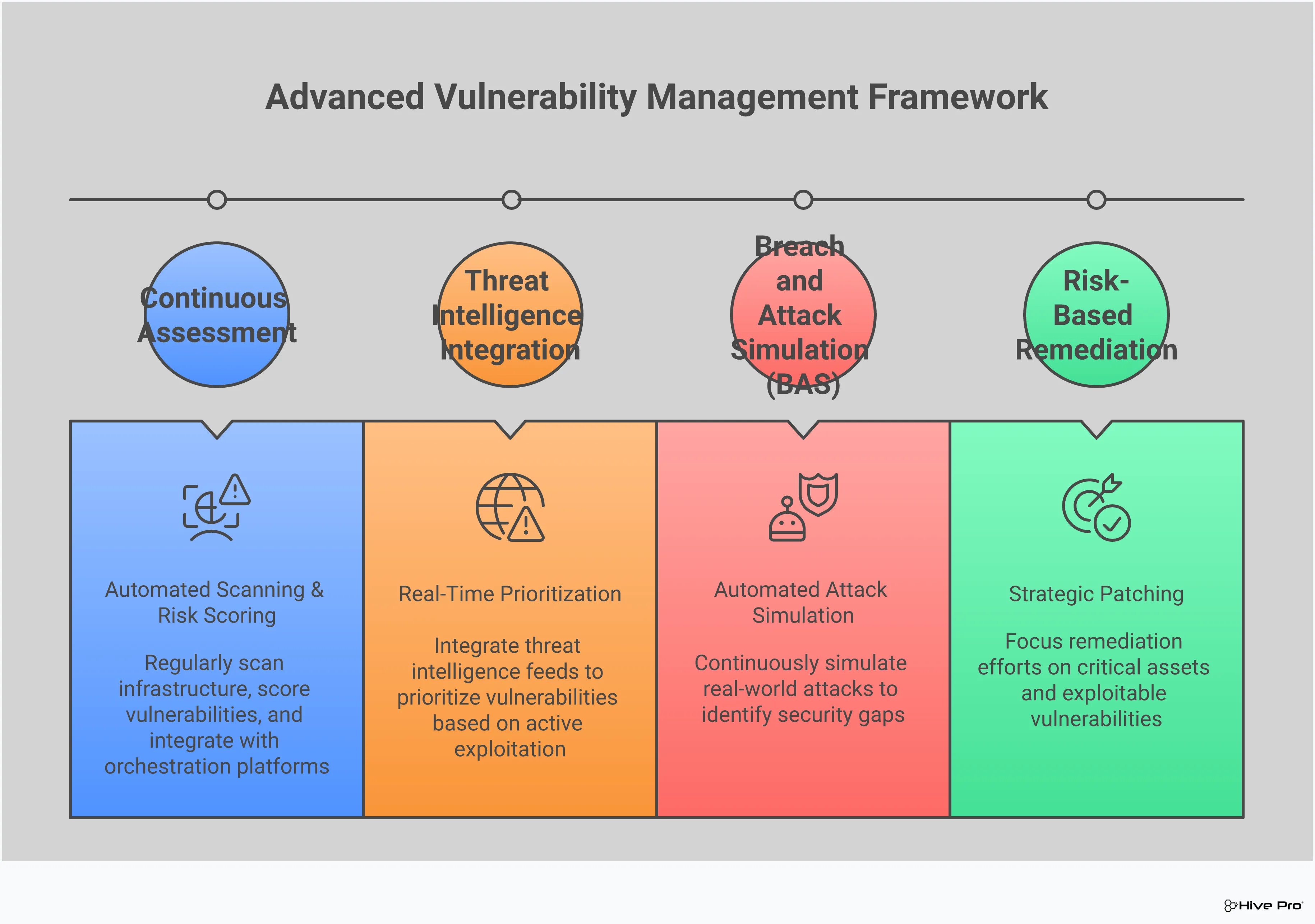
Why Is Breach and Attack Simulation (BAS) So Important?
Finding vulnerabilities is only half the battle. How do you know which ones pose a real, immediate threat to your organization? A high CVSS score doesn't always translate to high risk in your specific environment. This is where Breach and Attack Simulation (BAS) comes in. Instead of just listing potential weaknesses, BAS actively tests your defenses by simulating the same techniques attackers use. It’s like having a dedicated red team on-demand, constantly running drills to see if your security controls hold up. This shifts your strategy from simply managing a list of vulnerabilities to validating your security posture against real-world attack scenarios. By safely simulating attacks, you can pinpoint exactly where your defenses are strong and, more importantly, where they might fail when a real attacker comes knocking. This proactive approach gives you the proof you need to focus your remediation efforts on the gaps that truly matter, long before they can be exploited.
How BAS Shows You What's Truly Exploitable
A long list of vulnerabilities can be overwhelming, leading to alert fatigue and inefficient patching cycles. BAS cuts through the noise by showing you which vulnerabilities are actually exploitable in your environment. It moves beyond theoretical risk scores to provide concrete evidence of how an attacker could pivot from one vulnerability to compromise a critical asset. This pre-breach analysis gives you a clear view of potential attack paths specific to your organization's setup. By running these simulations, you can see firsthand if your existing security tools would detect or block a specific attack technique. This process of adversarial exposure validation helps you prioritize fixes based on proven risk, not just potential severity, ensuring your team spends its time on the issues that present the most danger.
Hive Pro's Built-In BAS vs. Qualys's Missing Feature
One of the most significant differences between Hive Pro and Qualys is how they handle attack simulation. Hive Pro includes BAS as a core component of its basic package, allowing you to test your defenses right out of the box. In contrast, Qualys VMDR does not have this feature built-in. To get similar functionality with Qualys, you'd need to invest in a separate, third-party BAS tool, adding complexity and cost to your security stack. This integrated approach from Hive Pro provides a more seamless and cost-effective way to validate your security controls. You can identify a vulnerability and immediately simulate an attack to test its exploitability, all within a single platform. This is a key advantage for teams looking to consolidate tools and create a more efficient workflow.
Test Your Security Controls Before an Attacker Does
Your security stack is only as good as its configuration and ability to stop modern threats. BAS allows you to continuously test your security controls—like firewalls, EDR, and SIEMs—to ensure they’re working as intended. It answers critical questions: Would you detect a ransomware attack? Could an attacker move laterally across your network? By safely simulating these real-world scenarios, you can validate your defenses proactively. This isn't just a theoretical exercise; it's a practical way to assess your readiness. The Uni5 Xposure Platform uses BAS to confirm whether vulnerabilities are just theoretical weaknesses or genuine, exploitable gaps. This continuous validation loop helps you strengthen your defenses and prove the effectiveness of your security investments before you have to face a real incident.
Proactive vs. Reactive: Why Hive Pro's Approach Is Different
The biggest difference between Qualys and Hive Pro isn't just a list of features—it's a fundamental shift in philosophy. Traditional vulnerability management often feels like a reactive game of whack-a-mole. A scan runs, a report with thousands of vulnerabilities appears, and your team scrambles to patch the most critical-sounding ones before the next scan. This cycle is exhausting and leaves you wondering if you’re even fixing the right things.
Hive Pro is built to break that cycle. The goal is to move your team from a reactive, patch-focused mindset to a proactive, risk-reduction strategy. Instead of just identifying vulnerabilities, the platform helps you understand your true exposure by connecting those vulnerabilities to active threats, business context, and the effectiveness of your security controls. This approach, known as Continuous Threat Exposure Management (CTEM), is about getting ahead of attackers by thinking like them. It’s less about checking boxes and more about making strategic decisions that genuinely reduce your organization's risk. This means your team can stop chasing endless alerts and start focusing on the threats that pose a real and present danger to your business.
Moving from Periodic Scans to Continuous Exposure Management
The old model of running periodic scans is no longer enough to keep up with today's threats. Attackers aren't waiting for your weekly scan to finish; they're constantly looking for openings. This is why a continuous approach is so critical. Hive Pro’s Uni5 Xposure platform unifies data on vulnerabilities, threats, and business context into a single, actionable framework. Instead of getting a static snapshot of your risks once a week or once a month, you get a live, dynamic view of your security posture. This allows you to align your security efforts with what’s most critical to the business, moving beyond the limitations of periodic scans to a more resilient model of continuous exposure management.
A Simpler User Experience for Your Team
Your security team is likely already dealing with a dozen different tools, each with its own dashboard and alerts. Adding another complex system just contributes to the noise. Hive Pro is designed to simplify this by easily integrating security data from your existing tools without requiring you to buy additional licenses for every connection. This creates a unified view of your security landscape, making it much easier for your team to manage and respond to threats effectively. By consolidating data into one place, you can reduce tool fatigue and give your team a clear, comprehensive picture of your exposure, which is a huge step toward a more efficient workflow.
How to Shift from Reactive Patching to Proactive Risk Reduction
Are you tired of the endless cycle of patching? A proactive strategy focuses on risk, not just vulnerability scores. Because Hive Pro helps you see a broader range of vulnerabilities than many traditional scanners, you can prioritize the elimination of imminent risks first. This means you can focus your team's valuable time and resources on fixing the weaknesses that attackers are actively exploiting right now. This strategic shift moves your program away from simply reacting to scan results and toward a more intelligent approach centered on proactive risk reduction. It’s about working smarter, not just harder, to improve your overall security posture.
Pricing: What Will Each Platform Really Cost You?
Figuring out the true cost of a security platform can feel like trying to solve a puzzle. It’s rarely just about the sticker price. You have to consider licensing models, potential integration fees, and what it will take to get your team up and running. A platform that looks affordable upfront can quickly become expensive once you factor in all the extras.
When you’re comparing Qualys and Hive Pro, it’s important to look at the complete financial picture. Think about not just what you’ll pay today, but what the total cost of ownership will be over the next few years. Let’s break down how each company approaches pricing so you can see which model aligns better with your budget and your team’s needs.
Understanding Qualys's Licensing and Integration Fees
Qualys offers a lot of flexibility, but that flexibility can come with complexity. Their pricing is based on a mix of factors, including which of their Cloud Platform Apps you choose, the number of IP addresses you need to scan, and how many user licenses you require. This à la carte approach means costs can vary widely and often grow as your organization does.
Their annual subscription plans start around $3,995, but this is just a baseline. As you add more assets and applications, the price tag can climb. They also offer per-scan packages, which can be an option for smaller projects but may not be cost-effective for continuous monitoring. The main takeaway is that you’ll need to carefully map out your exact needs to get an accurate quote, and be prepared for that cost to change as your attack surface evolves.
A Look at Hive Pro's Transparent Pricing
One of the biggest challenges with enterprise software is getting a straight answer on pricing. Hive Pro takes a different approach by focusing on transparency. The goal is to make it easy for you to understand what you’re paying for without worrying about hidden fees or surprise charges down the line. This makes budgeting much more predictable and straightforward.
While every organization’s needs are different, you can get a clear picture of the investment required to protect your specific environment. This transparent model means you can focus on the platform’s capabilities rather than trying to decipher a complicated licensing agreement. The Hive Pro Uni5 Xposure Platform is designed to provide comprehensive threat exposure management in a single package, simplifying both your security stack and your budget.
Thinking About the Total Cost of Ownership
The license fee is just one piece of the puzzle. Total cost of ownership (TCO) includes everything from implementation and integration to training and ongoing maintenance. Qualys includes 24/7 support and free training resources with its subscriptions, which certainly adds value. However, you also have to consider the potential costs of integrating it with tools that aren’t supported out of the box.
This is where Hive Pro’s approach can significantly lower your TCO. With over 100 built-in integrations and a more intuitive user experience, your team can spend less time on setup and training and more time actually reducing risk. Because features like Breach and Attack Simulation are already included, you don’t have to purchase and integrate a separate tool. This all-in-one approach not only simplifies your security operations but also reduces the hidden costs that often come with legacy platforms.
Which Vulnerability Management Tool Is Right for You?
Choosing the right platform is about more than just features; it’s about finding a partner that aligns with your security philosophy and operational needs. Both Qualys and Hive Pro offer powerful tools, but they cater to different priorities. Your decision will come down to whether you’re looking for a traditional, all-in-one scanning tool or a more modern, proactive platform for threat exposure management. Let's break down the key considerations to help you find the best fit for your team.
When Does Qualys Make Sense?
Qualys VMDR is a well-known name in the industry, and for some organizations, it can be the right choice. If your team is looking for a seamless, single-vendor solution that handles the entire lifecycle from vulnerability detection to patching, Qualys offers a consolidated package. It’s a straightforward option for businesses that want to bundle these core functions without integrating multiple specialized tools. This approach can be appealing if your primary goal is to meet compliance requirements and manage a traditional vulnerability management program. For teams that prioritize an all-in-one system for basic scanning and patching, Qualys provides a familiar and established path.
Why Hive Pro Offers a Better Value
While Qualys focuses on the scan-and-patch cycle, Hive Pro is built for the complexities of the modern threat landscape. The reality is that most security teams are drowning in alerts. Hive Pro is designed to cut through that noise. Instead of just giving you a longer list of problems, our platform helps you reduce the overwhelming number of vulnerabilities so you can focus your limited resources on eliminating imminent risks. The Uni5 Xposure platform unifies data from vulnerabilities, threats, and your unique business context into a single, actionable framework. This allows you to move from simply managing vulnerabilities to truly understanding and reducing your threat exposure, which is a far more strategic way to enhance your security posture.
Key Factors to Consider Before You Decide
Before you make a final decision, take a step back and look at your current challenges. A common struggle for security teams is simply knowing what to protect. You can't secure what you can't see, and a scanner is only as good as the visibility it has into your assets. Do you have a clear and continuous view of your entire attack surface, including shadow IT and unmanaged devices? Another key factor is the complexity of your infrastructure and the sheer volume of alerts your team handles daily. Is your current process creating more work or providing clear direction? The right tool should help you answer the most important question: "What do we fix first?" Your choice should reflect your goal to either continue a reactive patching cycle or shift toward a proactive threat exposure management program.
Related Articles
- Hive Pro vs Qualys VMDR: Full Feature Comparison
- How BAS Improves Threat Exposure Management
- The Ultimate Guide to Threat Exposure Management
- Top Benefits of Vulnerability Prioritization
- Exposure Management: A Proactive Security Guide
- Qualys replacement solutions reviewed
- Tenable vs Hive Pro comparison
- Rapid7 vs Hive Pro comparison
Frequently Asked Questions
I already use a vulnerability scanner. How is Hive Pro different? That's a great question, and it gets to the heart of the difference between traditional tools and a modern platform. Think of Hive Pro not as a replacement for your scanner, but as the brain that makes sense of all the data your scanner and other security tools collect. While a scanner is great at finding a long list of potential weaknesses, our platform focuses on answering the next, more important question: "Of all these weaknesses, which ones actually pose a real threat to my business right now?" We do this by adding layers of context, like active threat intelligence and business criticality, to give you a clear, prioritized action plan.
My team is drowning in alerts. How does your platform help reduce the noise instead of adding to it? We hear this from security professionals all the time, and it’s the exact problem we’re built to solve. Instead of giving you another dashboard with more alerts, our platform consolidates and analyzes data from your entire security stack. By combining information on vulnerabilities with real-world threat intelligence and an understanding of your asset importance, we generate a single, unified risk score. This process filters out the low-risk noise and turns thousands of potential issues into a short, manageable list of the most critical exposures you need to address immediately.
What exactly is Breach and Attack Simulation (BAS), and why do I need it? Think of Breach and Attack Simulation as a way to safely run drills against your own defenses. It simulates the techniques that real attackers use to see if your security controls—like your firewall or endpoint protection—would actually stop them. A vulnerability scan might tell you a door is unlocked, but BAS actually tries to open the door and walk through it. This gives you concrete proof of which vulnerabilities are truly exploitable in your environment, allowing you to prioritize fixes based on proven risk, not just a theoretical score.
We use a lot of different security tools. Will Hive Pro replace them or work with them? Our platform is designed to work with the tools you already have and trust. We believe in an open approach, which is why we have over 100 out-of-the-box integrations with the most common scanners, endpoint detection tools, and cloud security platforms. The goal is to be the central hub that unifies all your security data in one place, giving you a complete and accurate picture of your risk. This allows you to get more value from your existing investments without getting locked into a single vendor's ecosystem.
How does your threat intelligence actually help me decide what to fix first? Not all threat intelligence is created equal. A generic feed might tell you a vulnerability is being exploited somewhere in the world, which isn't always helpful. Our in-house research team, HiveForce Labs, provides targeted intelligence that connects vulnerabilities to specific attacker groups and campaigns that are active in your industry and region. This context is critical because it helps you understand which threats are not just possible, but probable for your organization. It’s the key to focusing your team’s limited time on the handful of issues that pose a clear and present danger.







.svg)